

Cleaning Care Matters: The Complete Guide to a Healthier, Cleaner Home

Cleaning care matters more than most people realize. A clean home isn’t just about looks. It protects your health, extends the life of your belongings, and makes daily life easier. In this guide, you’ll learn exactly why cleaning care matters, how to build a routine that actually works, and which mistakes to avoid, whether you’re a total beginner or someone who cleans professionally.
This guide is written in plain English. No fluff. Just practical steps you can use today.
What Does “Cleaning Care Really Mean?
Cleaning care means treating cleaning as an ongoing habit, not a one-time chore. It combines regular cleaning, proper product use, and care for the materials in your home, like wood, fabric, and stone, so they last longer and stay safe to use.
Most people think cleaning is just wiping surfaces or vacuuming floors. Real cleaning care goes deeper. It includes:
- Using the right product for the right surface
- Cleaning at the right frequency, not too often or too little
- Understanding what causes dirt, germs, and buildup in the first place
- Protecting your health and the health of your family or clients
This is where cleaning care matters most: it turns cleaning from a random task into a system that protects your home and your health over time.
Why Cleaning Care Matters for Your Health
Cleaning care matters because a dirty home directly affects your physical health. Dust, mold, bacteria, and allergens build up fast in spaces that aren’t cleaned properly, and this can lead to real health problems.
Here’s how poor cleaning habits affect your body:
- Allergies and asthma. Dust mites, pet dander, and mold spores trigger allergic reactions and asthma attacks. The Environmental Protection Agency notes that indoor air can be more polluted than outdoor air, partly due to dust and chemical buildup indoors.
- Illness spread. Kitchens and bathrooms hold bacteria like E. coli and salmonella on surfaces such as sponges, sinks, and cutting boards.
- Mental health. Studies from health researchers link cluttered, dirty spaces to higher stress and lower focus. A clean space genuinely helps you think more clearly.
- Skin issues. Dirty bedding and towels can cause acne, irritation, and rashes, especially if changed less than once a week.
This is a core reason cleaning care matters so much for families with kids, elderly members, or anyone with a weak immune system.
Quick Health Check: Signs Your Cleaning Routine Needs Work
- You notice a musty smell in any room
- Dust builds up again within two to three days
- Family members sneeze more indoors than outdoors
- You can’t remember the last time you washed your pillowcases
If two or more of these sound familiar, it’s time to rebuild your routine using the checklist below.
Why Cleaning Care Matters for Your Home and Belongings
Cleaning care matters because it protects the value and lifespan of everything you own, from floors to furniture to appliances. Dirt and grime aren’t just ugly. They’re abrasive and can wear down materials over time.
Here’s what happens when cleaning care is ignored:
- Flooring wears out faster. Grit and sand act like sandpaper under foot traffic, scratching hardwood and wearing down carpet fibers.
- Appliances break down sooner. A dirty refrigerator coil or clogged dryer vent makes appliances work harder, which shortens their life and raises energy bills.
- Fabric and upholstery degrade. Oils, sweat, and dust weaken fibers in sofas, mattresses, and curtains.
- Pests move in. Crumbs, grease, and standing water attract insects and rodents, which can cause structural damage.
Good cleaning care is really a form of maintenance. It costs a little time now to save a lot of money later.
Check This Post: BitClassic AppleWhite: What Is It? An Honest Guide to an Unverified Crypto Name in 2026
Daily, Weekly, and Monthly Cleaning Care Checklist
A simple schedule is the fastest way to make cleaning care matters in real life instead of staying just an idea. Break tasks into daily, weekly, and monthly buckets so nothing feels overwhelming.
Daily Tasks (5–15 minutes)
- Wipe kitchen counters and stovetop
- Wash or load dishes
- Make beds
- Wipe bathroom sink after use
- Sweep high-traffic floor areas
Weekly Tasks (1–2 hours)
- Vacuum carpets and rugs
- Mop hard floors
- Clean bathroom (toilet, tub, mirror)
- Change bed sheets
- Dust furniture and shelves
- Take out recycling and deep trash
Monthly Tasks (2–4 hours)
- Clean inside the refrigerator
- Wipe down baseboards and doors
- Clean windows and window tracks
- Deep clean the oven
- Wash shower curtains or liners
- Vacuum under furniture and beds
Seasonal Tasks (Every 3 Months)
- Clean dryer vents
- Wash curtains and blankets
- Deep clean carpets or rugs
- Declutter closets and storage areas
Room-by-Room Cleaning Care Guide
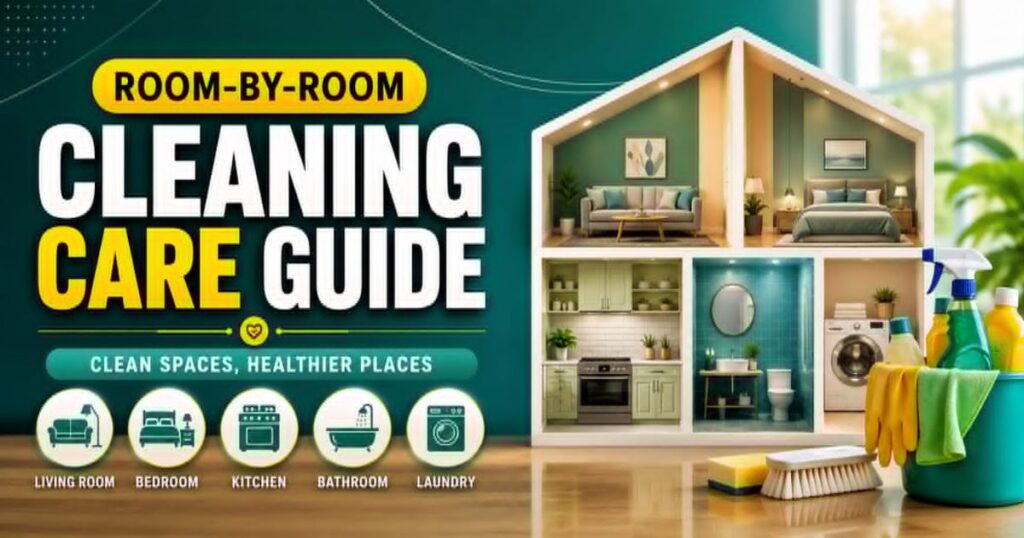
Different rooms need different cleaning care matters because they collect different types of dirt and germs.
Kitchen
The kitchen needs the most frequent attention because it deals with food, grease, and moisture daily.
- Disinfect countertops after preparing raw meat
- Replace kitchen sponges every one to two weeks
- Clean the sink daily; it often holds more bacteria than a toilet seat
- Wipe down cabinet handles, which are touched constantly but rarely cleaned
Bathroom
Bathrooms combine moisture and bacteria, making them a hotspot for mold and germs.
- Scrub the toilet at least twice a week
- Clean the shower or tub weekly to prevent soap scum and mold
- Replace bath towels every three to four uses
- Run the exhaust fan during and after showers to reduce moisture
Bedroom
- Wash pillowcases weekly, sheets every one to two weeks
- Vacuum mattresses monthly to reduce dust mites
- Air out the room daily by opening a window for a few minutes
Living Room
- Vacuum upholstery weekly
- Dust electronics carefully with a dry microfiber cloth
- Fluff and rotate cushions to prevent uneven wear
Home Office
- Wipe down keyboards and phone screens weekly; they carry more germs than many bathroom surfaces
- Clean under the desk monthly to remove dust buildup
Choosing the Right Cleaning Products and Tools
The right tools make cleaning care matters faster and more effective, while the wrong ones can damage surfaces or leave germs behind.
Must-Have Cleaning Tools
- Microfiber cloths (reusable and better at trapping dust than paper towels)
- A good vacuum with a HEPA filter for allergy control
- A mop with a washable head
- Rubber gloves to protect skin from harsh chemicals
- A scrub brush for grout and tough stains
Choosing Cleaning Products
Always check the label before buying or using a cleaning product. Look for:
- The surfaces it’s safe for
- Whether it needs dilution
- Any warnings about mixing with other products (never mix bleach and ammonia; this creates toxic fumes)
Learn Now: What Is TubeHalote? An Honest Look at an Unverified Online Term
Natural vs. Chemical Cleaning: A Comparison
Both natural and chemical cleaners have a place in a solid cleaning care matters routine. The right choice depends on the surface, the mess, and your household’s needs.
| Factor | Natural Cleaners | Chemical Cleaners |
| Best for | Light daily cleaning, glass, general surfaces | Heavy grease, disinfecting, mold and mildew |
| Safety | Generally low toxicity | Can be strong; needs ventilation and gloves |
| Cost | Often cheaper (vinegar, baking soda) | Varies; ranges from budget to premium |
| Effectiveness on germs | Limited disinfecting power | Stronger, EPA-registered disinfectants kill more germs |
| Environmental impact | Lower | Depends on the brand and formula |
Bottom line: Use natural cleaners for everyday wiping and chemical disinfectants for bathrooms, sick rooms, or areas that need real germ-killing power.
Pros and Cons of DIY Cleaning vs. Professional Cleaning
DIY Cleaning
Pros:
- Costs less over time
- Flexible schedule
- You control which products are used
Cons:
- Takes personal time and energy
- Deep cleaning tools (steam cleaners, carpet extractors) can be expensive to buy
- Easy to miss hidden dirt or mold without training
Professional Cleaning
Pros:
- Saves time
- Trained staff often catch issues you might miss
- Good for deep cleans, move-outs, or post-renovation cleanup
Cons:
- Costs more, especially for recurring service
- Requires scheduling and trust in the company
- Quality can vary between providers
If you choose a professional service, always check reviews, ask about their cleaning products, and confirm they’re insured. Avoid assuming every company offers the same quality, since results genuinely vary by provider.
Expert Tips for Better Cleaning Care
- Clean top to bottom. Dust falls, so always clean ceiling fans and shelves before floors.
- Work in circles. Circular motions lift dirt better than back-and-forth wiping on most surfaces.
- Let cleaners sit. Most sprays need one to two minutes of contact time to actually kill germs, not just make surfaces look wet.
- Color-code your cloths. Use separate cloths for kitchen, bathroom, and other areas to avoid spreading bacteria.
- Don’t skip ventilation. Open windows when using strong cleaning products to protect your lungs.
- Declutter before you clean. It’s hard to clean a surface that’s covered in items; clear it first.
Explore New: Fendi Return Policy: The Complete 2026 Guide to Returns, Exchanges, and Refunds
Common Cleaning Mistakes to Avoid
Understanding these mistakes shows exactly why cleaning care matters beyond just wiping surfaces.
- Using a dirty sponge. A wet sponge left out breeds bacteria within a day. Microwave it damp for one minute or replace it often.
- Spraying cleaner directly on electronics. This can damage circuits. Spray the cloth instead.
- Mixing bleach and other chemicals. This can create dangerous gases. Always use one product at a time.
- Cleaning windows in direct sunlight. The cleaner dries too fast and leaves streaks.
- Ignoring the cleaning tool itself. Vacuum filters, mop heads, and cloths need regular washing or replacing.
- Over-scrubbing delicate surfaces. Stone, wood, and some fabrics can scratch or dull with harsh scrubbing.
- Skipping “hidden” spots. Doorknobs, light switches, and remote controls are touched constantly but often forgotten.
FAQs about Cleaning Care Matters
Why does cleaning care matter so much for a healthy home?
Cleaning care matters because it reduces dust, allergens, and bacteria that can trigger allergies, asthma, and illness. A consistent routine also prevents mold growth and pest problems before they start.
How often should I deep clean my house?
Most homes benefit from a full deep clean once a month, with quick daily tasks and a more thorough weekly clean in between.
What is the difference between cleaning and disinfecting?
Cleaning removes dirt and germs from a surface using soap or detergent. Disinfecting uses chemicals to kill germs on that surface. You should clean first, then disinfect for the best results.
What are the most germ-filled spots in a home?
Kitchen sponges, sink drains, cutting boards, doorknobs, light switches, and phone screens typically carry the most bacteria.
Is natural cleaning as effective as chemical cleaning?
Natural cleaners work well for everyday dust and light dirt but usually don’t disinfect as strongly as EPA-registered chemical products. Use chemical disinfectants for bathrooms and sick rooms.
How do I start a cleaning routine as a complete beginner?
Start small. Pick three daily tasks (dishes, wiping counters, making the bed) and one weekly task (vacuuming). Build from there once these become habits.
Can poor cleaning habits affect mental health?
Research links cluttered and dirty environments to higher stress and lower focus. A clean, organized space can support better mental clarity.
How often should I replace cleaning tools like sponges and mop heads?
Replace kitchen sponges every one to two weeks, mop heads every one to three months depending on use, and vacuum filters based on the manufacturer’s guidelines.
Is it better to hire a cleaning service or clean myself?
It depends on your budget and time. DIY cleaning saves money and gives you full control, while professional cleaning saves time and can handle deep cleans more thoroughly.
What cleaning products should never be mixed?
Never mix bleach with ammonia or with other cleaning products. This combination can create toxic fumes that are dangerous to breathe.
Does cleaning care really extend the life of furniture and appliances?
Regular cleaning reduces the wear caused by dirt, grease, and grit, which helps flooring, upholstery, and appliances last longer and work more efficiently.
What is the best cleaning schedule for a busy household?
Focus on short daily tasks (10–15 minutes), a slightly longer weekly session, and one monthly deep-clean day. This spreads the work out so it never feels overwhelming.
Conclusion
Cleaning care matters for far more reasons than most people realize. It protects your health, keeps your home’s air and surfaces safer, and extends the life of everything you own, from flooring to appliances to furniture. The good news is that building a solid cleaning care routine doesn’t require expensive tools or hours of free time. It just requires consistency: a few daily habits, a weekly deep clean, and monthly attention to the spots that get overlooked.
Whether you’re cleaning your own home for the first time or refining a routine you’ve used for years, the core idea stays the same. Cleaning care matters because small, regular actions prevent big problems later.
Ready to put this into action? Pick one task from the daily checklist above and start today. Small steps build the habit that keeps your home healthy and clean for the long run.

Hi! I’m Mira Carter, founder of Hair Rexa with 8 years of experience in hair care and styling. I share simple tips, hairstyle ideas, and expert guidance to help you keep your hair healthy, strong, and looking fabulous every day.


