

10 Stunning Wolf Cut Hairstyles for Straight, Wavy, and Curly Hair types

The wolf cut hairstyles is a shag-mullet hybrid that blends heavy layers at the crown with wispy, curtain-like ends. Think of it as the rebellious love child of a 1970s shag and a modern mullet. It first exploded on TikTok in 2021, and unlike most viral trends, it never really left.
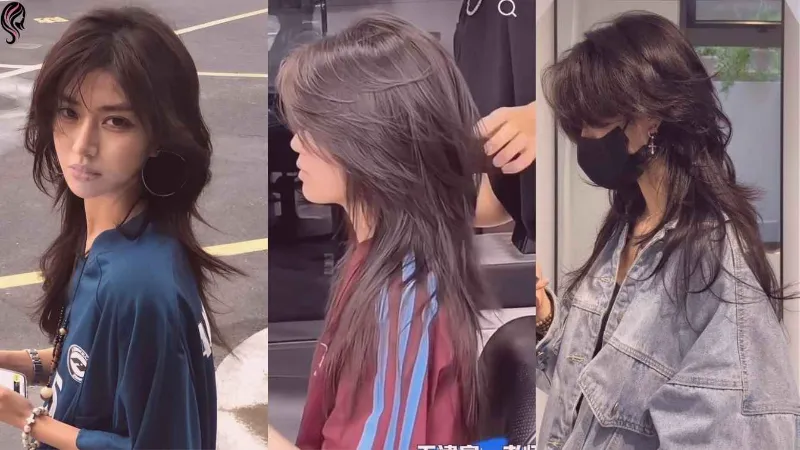
What makes it so enduring is its built-in versatility. The wolf cut looks intentionally undone which is hard to achieve with most cuts. It has natural volume at the top, movement through the mid-lengths, and a lived-in texture at the ends. You get structure without rigidity, which is exactly what most people are chasing.
Short definition: A wolf cut features choppy, disconnected layers starting from the crown, combined with a face-framing front section, curtain bangs or wispy fringe, and a soft, texturized perimeter. It suits nearly every hair texture when properly adapted.
Classic Wolf Cut for Straight Hair
✦Crisp layers, clean texture
✦Low-maintenance baseline
✦Great for fine hair types

Straight Hair Wolf Cut Precision Layering That Creates the Illusion of Volume
If you have straight hair, the wolf cut is actually one of the best options you could choose. The strategic layering breaks up the flatness that straight hair naturally falls into. A skilled stylist will use point-cutting or razor-cutting to create soft, broken layers instead of blunt lines. Ask specifically for “disconnected layers starting 2–3 inches from the root” and a curtain-bang fringe that grazes your cheekbones.
Pro Tip
When booking, ask for a “wolf cut with razor-cut ends” rather than just “wolf cut.” The razor finish prevents the blunt, block-like appearance that undermines the shaggy effect on straight hair.
Style Note
For straight hair, scrunch a small amount of sea salt spray into damp hair before diffusing. This mimics the natural texture the cut is designed to show off without the crunch of traditional texturizing spray.
Must Read: Baddie Hairstyle Ideas to Boost Your Confidence Instantly
Curly Wolf Cut
Letting Texture Do the Heavy Lifting
✦Maximizes natural curl pattern
✦Reduces shrinkage heaviness
✦Define-and-go friendly
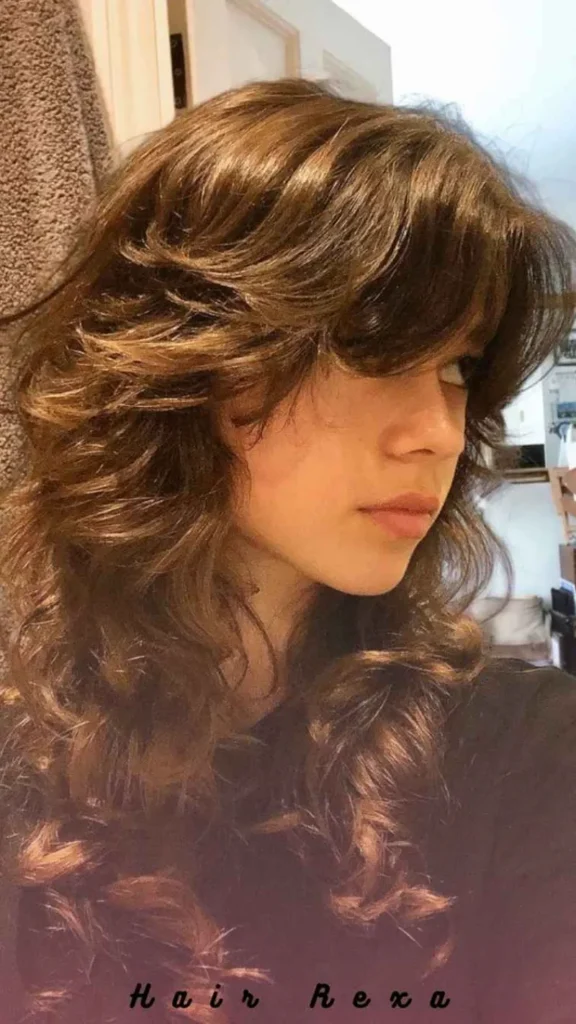
For curly hair (types 2C to 4A), the wolf cut works beautifully but the execution must be adapted. The biggest mistake is getting a wolf cut from a stylist who isn’t curl-trained. Dry-cutting curls is non-negotiable, because wet hair stretches and the layers will be completely off once it dries.
When done right, the wolf cut removes bulk from the bottom while adding bounce at the crown. The curtain bangs spring into soft ringlets or waves that frame the face perfectly. You end up with a shape that looks intentional rather than overgrown.
Real-World Scenario
Layla, a 2C-hair client, had been fighting flat roots and poofy ends for years. Her stylist gave her a curly wolf cut with shorter layers at the crown (starting 1 inch from root) and feathery ends. Result: defined crown volume, reduced bulk at the bottom, and a shape that held for 4–5 weeks between cuts.
Read Also: Hair Color Ideas That Make Short and Long Hair Look Beautiful
Short Wolf Cut
(Shoulder-Length and Above)
✦Modern, editorial finish
✦Neck-length to shoulder works
✦Statement-making silhouette

Short Wolf Cut The Boldest Version With the Highest Payoff
The short wolf cut ends anywhere between the jaw and shoulder. It leans more into the mullet side of the hybrid shorter sides and back, with longer, feathery top layers. It’s a commitment, but it’s also one of the most striking cuts going. The crown layers sit like a soft, lived-in shag, while the back neckline is usually tapered or softly squared. Best suited for oval, heart, and square face shapes.
Read More: Haircuts for Boys That Look Cool and Easy to Maintain
Long Wolf Cut
Dramatic Length, Maximum Movement
✦Keeps length, adds dimension
✦Best for wavy, thick hair
✦Low-key, grows out gracefully
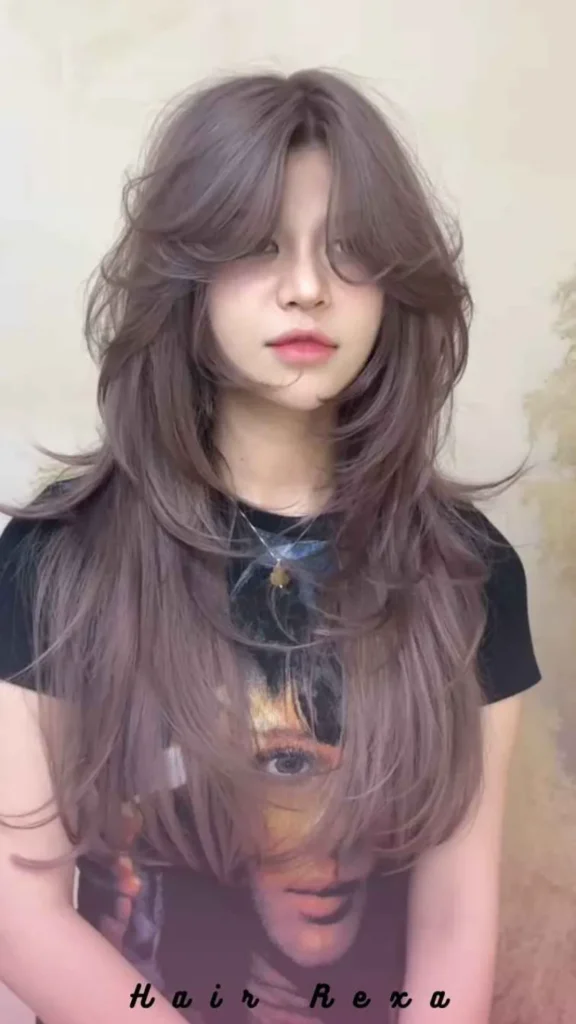
If you love your length but feel like your hair looks heavy and lifeless, the long wolf cut is your answer. Layers start high at the crown and cascade down, removing interior weight without sacrificing the overall length. The perimeter stays relatively long while the face-framing pieces are cut short enough to sit at the cheek or chin.
This version grows out beautifully. Unlike a bob or lob, there’s no awkward in-between phase. The long wolf cut just gradually becomes a long layered cut you can let it grow and gradually refresh the layers every 10–12 weeks rather than every 6–8 weeks.
Pro Tip
Ask your stylist for “internal layers, not surface layers” on a long wolf cut. Surface layers can make thick hair look stringy. Internal layers remove weight from underneath, maintaining the outer silhouette while adding movement only you can feel.
Don't Miss: Curly Pixie Cut Inspiration for Every Face Shape and Hair Type
Wolf Cut With Bangs
Curtain, Micro, or Fringe
✦Curtain bangs most popular pick
✦Frames every face shape well
✦Easiest maintenance of all bangs

Three Ways to Wear a Wolf Cut Bang
Curtain bangs are the classic pairing parted in the middle, feathered to the sides, and landing just below the brow or at the cheekbone. They suit almost every face shape and require minimal upkeep. Micro bangs (very short, sitting above the brow) work for oval and heart faces and give a more editorial look. A blunt fringe across the forehead is the boldest version it contrasts with the shaggy layers behind it and creates a striking visual divide.
Style Note
Curtain bangs only work long-term if you’re willing to blow-dry them into shape every few days. If air-drying is your routine, ask your stylist to cut them with extra texture they’ll fall more naturally without the blowout.
Colored Wolf Cut
Making Layers Pop With Tone
✦Balayage traces layered movement
✦Face-frame highlights work perfectly
✦Bold color elevates the texture

Color and the wolf cut hairstyles are made for each other. The layered structure creates natural depth variation, which makes blended color techniques like balayage, money piece highlights, or a root shadow look more dimensional and intentional. The layers catch light differently at each level, so a well-placed balayage actually appears to have more contrast than it really does.
Bold, single-process colors also look stunning in a wolf cut. A deep brunette with a slight red undertone, an ashy blonde with face-frame pieces, or even a vivid fashion color (burgundy, chestnut, teal) all work beautifully because the cut’s shaggy texture reads as deliberate and stylized rather than chaotic.
Mini Case Study
Zara, a stylist in London, noticed that almost every client who asked for a balayage in 2024 ended up adding a wolf cut too. “The two complement each other so naturally the layers make the color look twice as expensive,” she noted. She now recommends the combo as a single-session transformation.
Wolf Cut for Fine Hair
Volume Without the Trade-off
✦Crown layers add immediate lift
✦Avoid over-thinning the ends
✦Mousse is your best tool

Fine Hair Wolf Cut What Your Stylist Needs to Know Before Picking Up the Scissors
Fine hair needs a gentler approach to the wolf cut. The biggest risk is over-thinning the perimeter when fine hair is razored too aggressively, the ends look wispy to the point of sparse. The solution is to layer from the crown down while keeping the ends relatively thick. The layers should create visual volume at the root, not reduce the overall density further. A mousse-and-diffuse routine is ideal for fine hair wolf cuts: it adds body without weight.
Wolf Cut for Thick Hair
Managing Bulk Without Losing Shape
✦Internal thinning removes weight
✦Avoid outer-surface razor cuts
✦Shape holds longest on thick hair

Thick hair holds a wolf cut shape better than any other texture. The layers have real substance to them, the curtain bangs sweep dramatically, and the overall silhouette has a film-quality finish. The challenge is bulk management. Too much volume at the crown on thick hair can read as triangle-shaped rather than shaggy-chic.
Ask for “internal thinning” and specifically request the stylist thin out the nape area. The nape is the heaviest part of most thick heads of hair, and lightening it makes the overall shape feel airier. Avoid thinning shears at the surface they can create fluffy, frizz-prone texture that fights the look rather than enhancing it.
Wolf Cut Grow-Out Strategy
How to Transition Without Awkwardness
✦Trim layers, keep the length
✦Curtain bangs grow out gracefully
✦Morphs naturally into shag cut
Growing Out a Wolf Cut Your Month-by-Month Strategy
Month 1–2: Enjoy the peak shape. Month 3–4: The crown layers start to lengthen and the curtain bangs might grow past the cheekbone pin them back or use a middle part to extend their style life. Month 5–6: You’re in shag territory now. You can either get a light layer trim to refresh the wolf shape or continue growing into a long, layered look. The wolf cut’s disconnected layers mean the grow-out never looks blunt or boxy. It simply softens over time.
Wolf Cut by Face Shape
The Honest Guide
✦Oval faces: all variations work
✦Round faces: avoid chin-length layers
✦Heart faces: soft curtain bangs ideal
Oval face shape is the most versatile every version of the wolf cut works. Round face shapes benefit from layers that start above the jaw to avoid adding width, and a longer curtain bang rather than a full fringe. Square faces are softened by the wispy ends and the middle-parted bangs. Heart faces suit the wolf cut best with lighter ends and bangs that taper at the corners rather than sitting flat across the forehead. Long faces can use the wolf cut to create width blunter bangs and shorter face-framing layers work best.
Still Deciding? Here’s a Quick Comparison
| Hairstyle | Difficulty | Maintenance | Best Face Shapes | Pros | Cons |
|---|---|---|---|---|---|
| Wolf Cut (Classic) | Medium | Every 8–10 wks | Oval, Heart, Square | Versatile · Textured · Grows out well | Needs styling knowledge · Not pin-straight friendly |
| Short Wolf Cut | Advanced | Every 6–8 wks | Oval, Heart | Bold · Editorial · Maximum volume | Commitment · Hard to reverse quickly |
| Long Wolf Cut | Easy | Every 10–12 wks | All face shapes | Low commitment · Grows out gracefully | Less dramatic initial look |
| Curly Wolf Cut | Specialist | Every 8–10 wks | Round, Oval | Defines curls · Removes bulk | Must use curl-trained stylist |
| Wolf Cut + Curtain Bangs | Medium | Every 6–8 wks | All face shapes | Face-framing · Trending · Versatile | Bangs need regular trims |
| Colored Wolf Cut | High | Every 6–8 wks + color | All face shapes | Dimensional · Striking · Layered depth | Higher cost · Color upkeep required |
Conclusion
Wolf Cut Hairstyles are a great choice for anyone who wants a stylish and modern look. They add volume, texture, and movement to the hair. This haircut works well on short, medium, and long hair. It also looks good with straight, wavy, or curly hair types.
Many people love Wolf Cut Hairstyles because they are easy to style and full of personality. You can keep the look soft and simple or bold and edgy. With so many ideas to try, this trendy haircut can help you feel fresh, confident, and ready for a new change.
Expert Tips & Practical Insights
Ask for a “soft wolf”
If you’re unsure, request a softer version fewer disconnected layers, less extreme crown volume. Easier to commit to, easier to style.
Use a diffuser, not a dryer
Even on straight hair, diffusing on low heat creates the air-dried texture the wolf cut is built around. A standard blowout often kills the shape.
Trim every 8 weeks
Wolf cuts lose definition after 10–12 weeks. A light dusting and crown-layer refresh every 8 weeks keeps the shape looking intentional.
Bring reference photos
Wolf cut means different things to different stylists. Bring 2–3 photos showing the exact layer length, bang style, and texture you want. Be specific.
Texture spray is essential
A lightweight texturizing spray (not hairspray) is the single best product for maintaining a wolf cut’s effortless, undone finish between washes.
Protect your ends
Wispy ends dry out fast. Use a small amount of hair oil on the ends only never roots to keep the feathered perimeter healthy and defined.
FAQ’S About Wolf Cut Hairstyles
Is the wolf cut suitable for all hair types?
Yes but the technique must be adapted for each texture. Straight hair benefits from razor-cut ends. Curly hair needs dry-cutting. Fine hair needs restrained thinning. Thick hair needs internal bulk removal. The base cut works for all types.
How long does a wolf cut take at the salon?
A standard wolf cut takes 45–75 minutes. If you’re adding curtain bangs and color (balayage or highlights), budget 2.5–3.5 hours and book a consultation first.
Can you do a wolf cut on short hair?
Yes. The short wolf cut works best when hair is at least 4–5 inches at the crown. Very short hair (pixie length) doesn’t have enough length for the disconnect layering that defines the cut.
Does the wolf cut work without heat styling?
Absolutely. It’s one of the few cuts designed to look good air-dried. Use a texturizing spray on towel-dried hair and scrunch lightly. The cut does most of the work on its own.
What’s the difference between a wolf cut and a shag cut?
The shag cut has more uniform layers throughout and a blunter perimeter. The wolf cut is more disconnected the crown layers are very short and choppy, while the perimeter can be longer and more feathered. The wolf cut also incorporates more of the mullet’s silhouette (shorter front, longer back).


