

Curly Pixie Cut Inspiration for Every Face Shape and Hair Type

A Curly Pixie Cut is a short and stylish hairstyle made for naturally curly hair. It usually has short sides with soft curly layers on the top and around the head. This haircut gives a fresh, modern, and playful look without needing too much styling time every day. Many women love this haircut because it is light, comfortable, and easy to manage in busy daily life. A Curly Pixie Cut also helps show the natural beauty and texture of curls in a simple way. It is a great hairstyle choice for anyone who wants short hair with volume, shape, and personality.
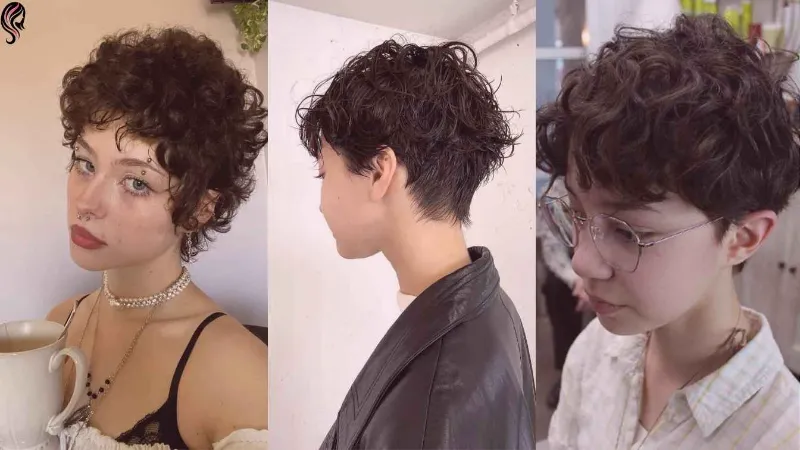
If you want a hairstyle that looks trendy and feels easy to wear, a Curly Pixie Cut can be the perfect option for you. This haircut can make your curls look fuller, bouncier, and more defined with very little effort. It also gives a bold and confident appearance while still looking soft and feminine at the same time. Many people choose this hairstyle because it works well for different ages, face shapes, and curl patterns. Whether you like a neat look or a messy curly style, this haircut can match your personal fashion easily. A Curly Pixie Cut is simple, modern, and always stays in style.
Classic Tight-Curl Pixie
Natural shrinkage is your friend
Works on 3c–4b textures
Minimal daily styling
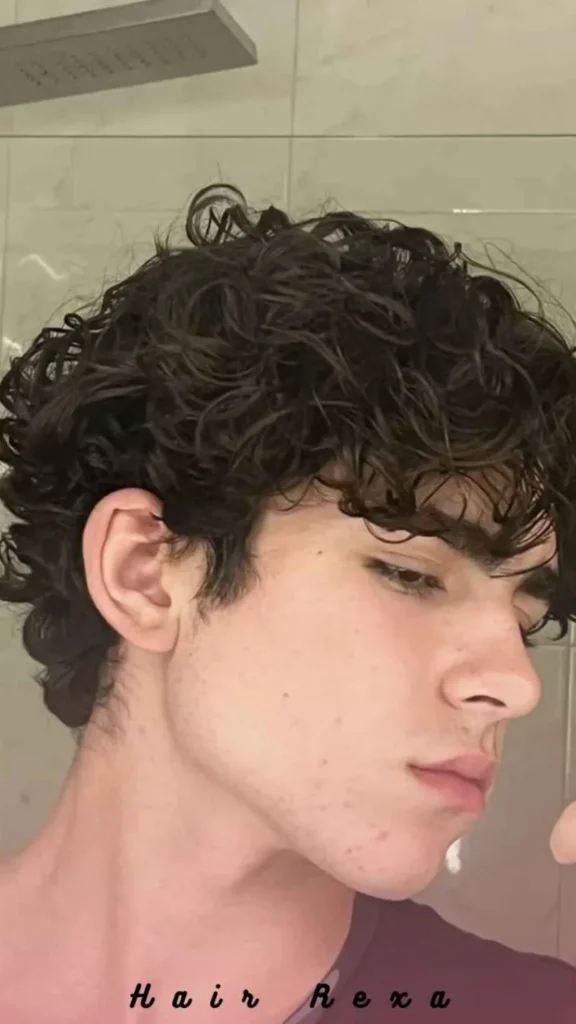
The classic tight-curl pixie is cut close on the sides and back typically a fade or taper with a small crown of densely packed curls left on top. Because tight curls (Type 3c to 4b) shrink dramatically when dry, the stylist must cut wet length knowing the finished look will appear significantly shorter. This is the fundamental rule most first-timers don’t hear until it’s too late.
What makes this variation so wearable is its versatility. You can wear the top curls as-is for a natural, rounded afro-pixie shape, or use a tiny amount of gel and finger-coil individual curls for a more defined, editorial look. The sides stay sharp and clean with minimal effort between cuts typically a shape-up every 3–4 weeks keeps everything crisp.
Consider Amara, a 34-year-old with 4a curls who had been relaxing her hair for a decade. After going natural, she spent two years struggling with length retention and protective styles. She cut a tight-curl pixie with a mid-fade in spring 2026. Her morning routine went from 45 minutes to under 10: a palmful of leave-in conditioner, a light curl cream, and done. She describes the transformation as “the first time I liked what I saw before I styled it.”
Style Note: Pair a tight-curl pixie with bold earrings geometric gold hoops or statement drops. With your neck and jaw exposed, jewelry becomes the natural focal point and completes the look effortlessly.
Must Read: Easy Hairstyles for School: Trendy and Effortless Ideas for Students
Curly Pixie with Side-Swept Fringe
Softens angular face shapes
Works on 2c–3b waves & curls
Adds romantic dimension
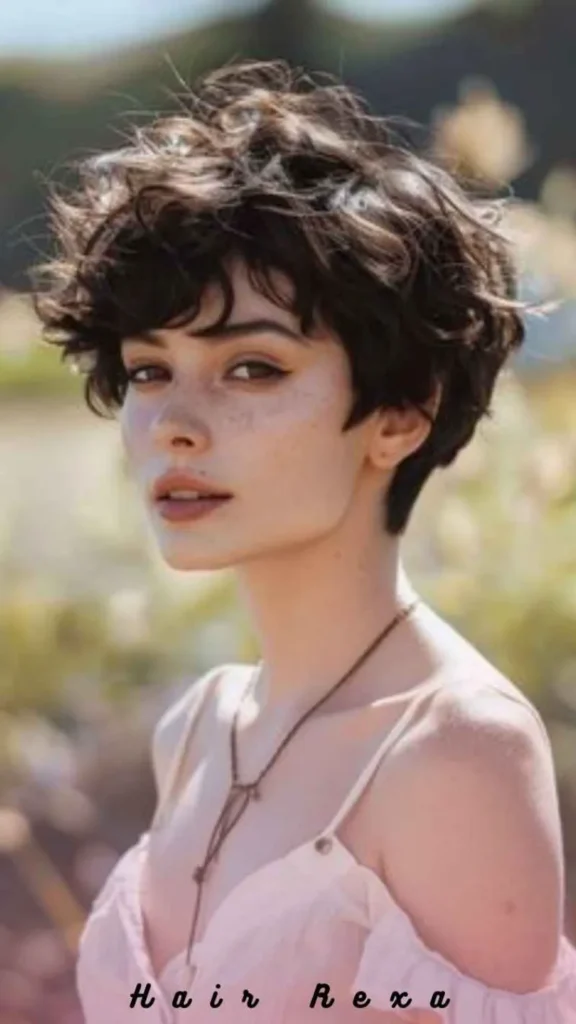
A side-swept fringe added to a pixie cut is one of the most flattering modifications available, particularly for people with heart-shaped, square, or oblong faces. The diagonal sweep of longer curls across the forehead breaks up the hairline symmetrically and introduces a soft, asymmetrical movement that photographs beautifully. This is the version you’ve seen on red carpets it reads glamorous without trying.
For wavy or loosely curled hair (Type 2c to 3b), a side-swept fringe is especially effective because those curl patterns naturally fall rather than spring straight up. The fringe can be styled by simply directing damp curls to one side and allowing them to dry. For tighter textures, a small amount of curl-defining cream and a light hold spray keeps the sweep in place without stiffness.
Style Note: If your curl pattern is mixed looser at the front and tighter at the crown embrace it. A side-swept fringe on wavy-ish sections against a tighter crown creates beautiful textural contrast that reads as intentional, not unkempt.
Read Also: Korean Hairstyle Ideas for Stylish and Modern Hair Makeovers
Undercut Curly Pixie
Bold, architectural contrast
Reduces bulk instantly
Edgy yet feminine
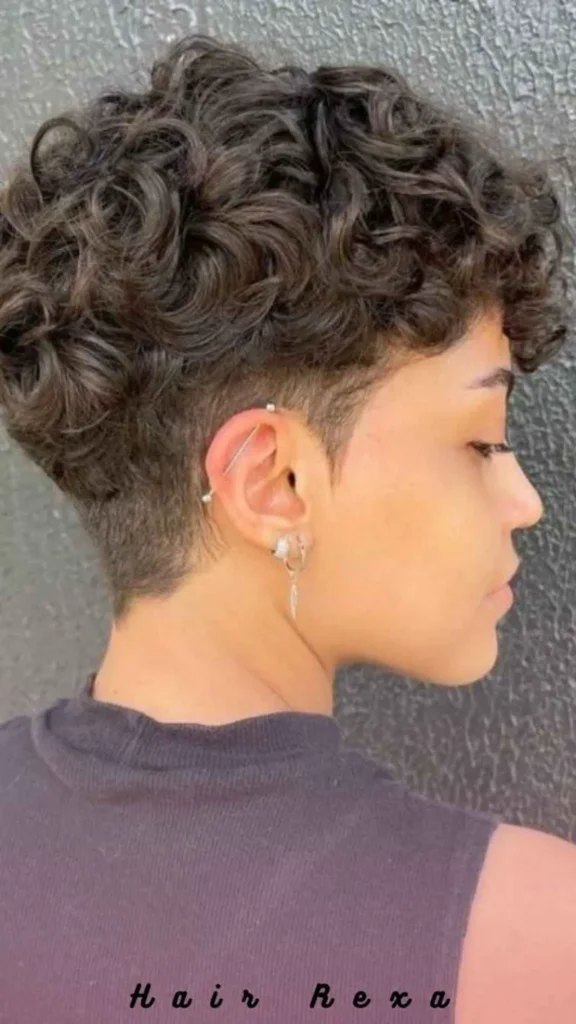
The undercut curly pixie is exactly what it sounds like: the hair underneath typically at the nape and sides is shaved or clipped very close, while the top section retains full curl length and volume. The contrast is striking. From the front, you see a full, voluminous curl situation; from the back, clean geometric lines. It’s the hair equivalent of wearing a blazer with shorts.
This cut solves one of the biggest challenges for curly hair wearers: weight and bulk. When thick, curly hair is too heavy, the curls lose definition and flatten out. Removing weight underneath allows the top curls to spring, coil, and clump the way they’re designed to. The result is more curl definition, not less counterintuitive but consistently true.
Real Life Scenario
Priya, a software engineer with dense, 3c curls, had always worn her hair long specifically because she feared short cuts would look “too puffy.” Her stylist convinced her to try an undercut pixie. With the undercut removing most of the weight, her top curls coiled into beautifully defined ringlets for the first time. She’d been fighting her curls her entire adult life. The cut, not the products, was the missing variable.
Pro Tip: Design your undercut with purpose. A straight-across underline at the nape reads sleek and modern. A curved or V-shaped undercut adds attitude. Ask to see a photo of the shaved line before committing that shape lives on your neck and matters.
Read More: Messy Bun Hairstyles That Look Cute, Clean, and Perfect for Any Occasion
Tapered Curly Pixie
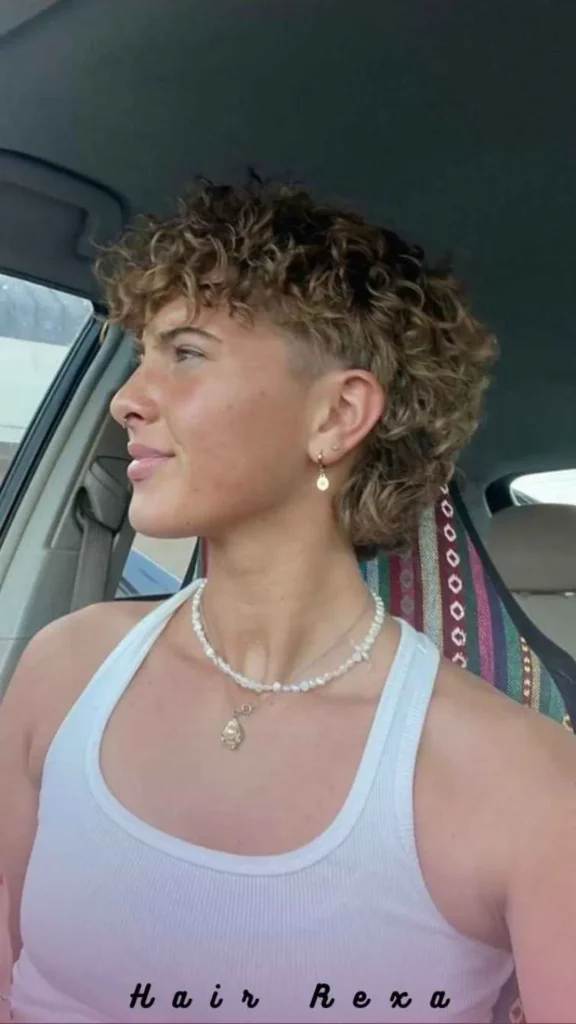
Most universally flattering version
Gradual, polished fade
Works on most face shapes
The tapered curly pixie is the approachable cousin of the undercut instead of a hard contrast, the hair graduates smoothly from close-cropped at the nape and temples to full curl height at the crown. The taper creates a clean, symmetrical silhouette that works across virtually every face shape, making it the most versatile version on this list. If you’re considering a curly pixie for the first time and have no idea where to start, the tapered pixie is your answer.
Because the weight reduction is gradual rather than dramatic, the taper is also more forgiving during the grow-out phase. The transition from pixie to TWA (teeny-weeny afro) to something longer feels intentional rather than awkward, which matters enormously for people who are nervous about committing to a drastic length.
Style Note: A tapered pixie on naturally gray or silver curls is one of the most sophisticated looks in contemporary hair. Silver curls photographed against warm-toned skin create extraordinary contrast. If you’re embracing your gray, this is the cut that makes the transition look like a choice because it is.
Don't Miss: Layered Haircuts: Simple and Stylish Cuts for Everyday Elegance
Curly Pixie Bob (Pob)
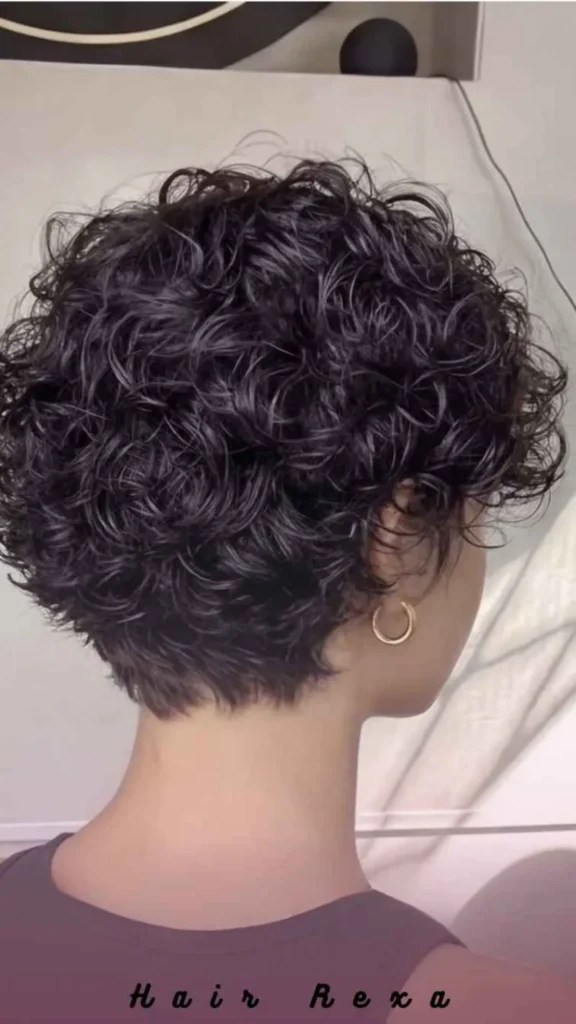
Longest version of the pixie
Easiest grow-out stage
Maximum styling flexibility
The pixie bob or “pob” sits in the sweet spot between a pixie and a bob: the back is cut short and close, but the front sections are left longer, framing the face with curls that fall to or below the jawline. For curly hair, this creates a naturally lopsided, textured look that’s inherently modern. It’s the move for someone who wants the ease of a pixie but isn’t ready to lose all their front length.
The pob works especially well for Type 2b and 3a curls the kind that form soft S-bends rather than tight coils. Those curl patterns create gorgeous movement when they have a bit of length to work with, and the contrast between the close back and the longer curly front sections creates effortless shape without needing volume products.
When 29-year-old Leila cut her waist-length 3a curls for the first time, she was terrified. Her stylist split the difference with a curly pob: shaved nape, close temples, longer front sections falling just past her jaw. The adjustment period was one awkward week. After that, she couldn’t imagine going back. The pob required no morning heat, no diffusing time, and none of the neck tension she’d had from heavy long hair. She’s had variations of the same cut for three years.
Pro Tip: To style a curly pob, apply product on soaking-wet hair, then use the “prayer hands” method pressing curls between flat palms and sliding down rather than scrunching. This elongates looser curl patterns and gives the front sections a sleek, intentional drape.
Bold Color + Curly Pixie
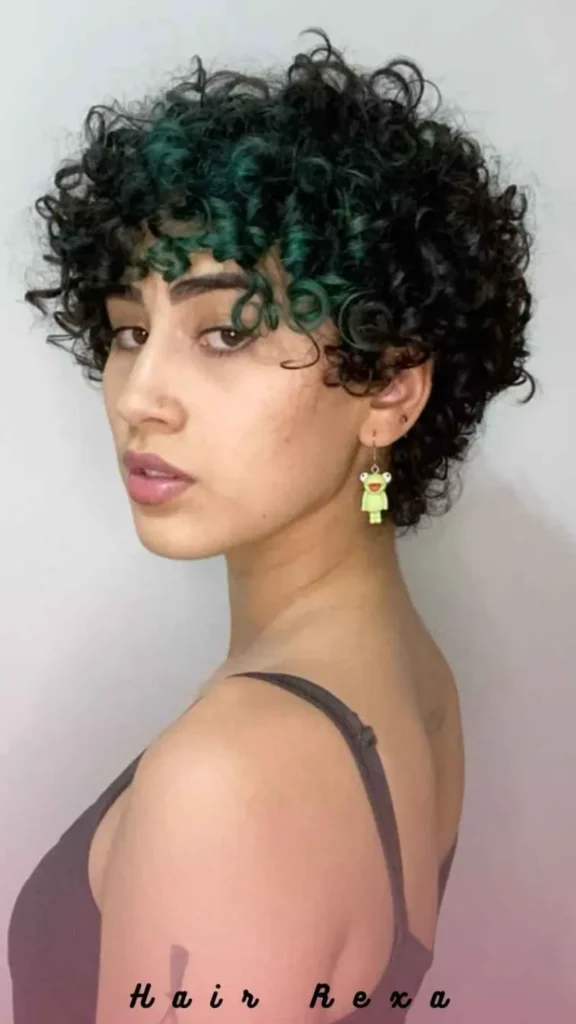
Color amplifies texture visually
Low commitment with short hair
Maximum visual impact
A curly pixie cut and bold color are a powerful combination for one specific reason: short curly hair has natural three-dimensional texture that catches light differently at every angle. A single-process color on straight hair looks flat in comparison. When that same color whether it’s a warm copper, platinum blonde, or deep burgundy lands on a head of curls, the dimensional variation makes it look like a much more complex, expensive treatment than it actually is.
For darker curl textures, highlights placed specifically on the curl tips create a sun-kissed, lived-in effect that’s striking even in a pixie length. For lighter textures, a vivid fashion color (think cobalt, dusty rose, or forest green) hits differently on curls the color shifts slightly depending on how each curl catches the light, creating movement even when the hair itself is still.
Style Note: If you’re coloring for the first time, consider a “money piece” two bright face-framing sections at the front rather than all-over color. On a pixie, this frames the face dramatically and is dramatically easier to maintain than full-head color.
Grow-Out Curly Pixie (TWA Transition)
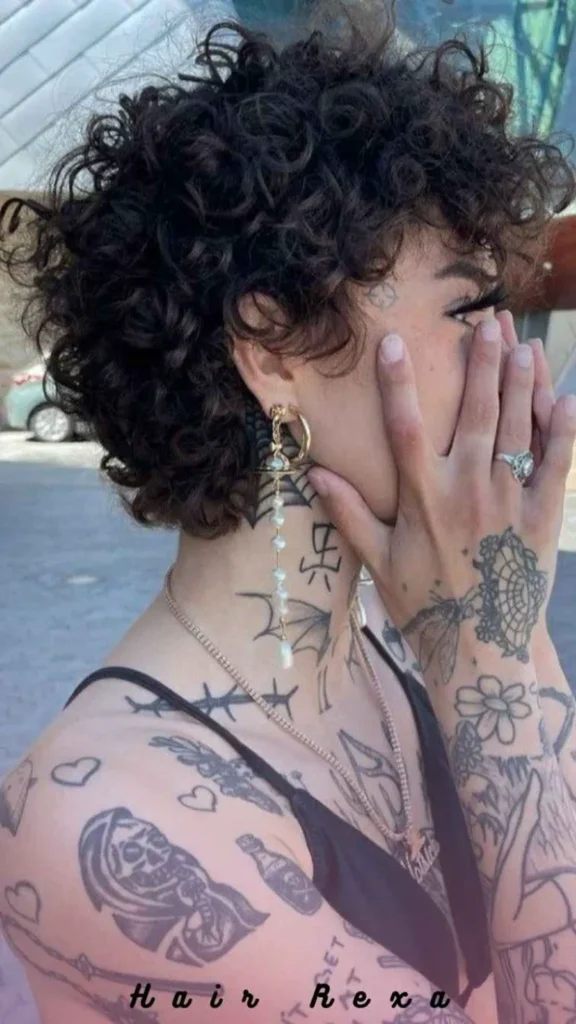
Every stage is a complete look
Patience rewarded with texture
Protective and natural-forward
The grow-out phase of a curly pixie commonly called the TWA (teeny-weeny afro) stage is something many stylists fail to prepare clients for. But when managed intentionally, each inch of growth from a pixie is a distinct, beautiful stage in its own right. The key is shifting your styling approach as length increases, rather than fighting the in-between awkwardness.
At the two-to-four inch stage, finger coils, twist-outs, and braid-outs become your tools. A small amount of a heavier custard product gives definition and clumping that a short pixie doesn’t need. At the four-to-six inch stage, you can begin experimenting with wash-and-go volume, puff styles, and even a tiny pineapple at the crown. Each stage is a new look you’re not in limbo, you’re on a curated journey.
Pro Tip: During the TWA stage, get a “dusting” trimming only the very ends rather than a full shape-up. This removes split ends without sacrificing meaningful length and keeps the texture looking intentional rather than neglected as you grow.
Still Deciding? Quick Comparison: Curly Pixie Variations
| Hairstyle | Difficulty | Maintenance | Best Face Shapes | Pros | Cons |
|---|---|---|---|---|---|
| Classic Tight-Curl Pixie | ● Easy | Low Shape-up every 3–4 weeks | Oval, Round, Square | Fastest morning routine · Shows natural curl · Very low product use | Shrinkage surprises · Requires skilled stylist for curl-aware cutting |
| Side-Swept Fringe Pixie | ● Medium | Low–Medium Light daily styling of fringe | Heart, Square, Oblong | Softens strong features · Very photogenic · Versatile styling | Fringe needs daily direction · Mixed textures can be tricky |
| Undercut Curly Pixie | ● Medium | Medium Undercut shave every 2–3 weeks | Oval, Long, Diamond | Removes bulk dramatically · Bold, editorial · Best curl definition | More frequent touch-ups · Bold commitment · Hard grow-out |
| Tapered Curly Pixie | ● Easy | Low Shape-up every 4–5 weeks | All face shapes | Most universally flattering · Clean grow-out · Beginner-friendly | Less dramatic than undercut · May look slightly conservative |
| Curly Pixie Bob (Pob) | ● Easy | Low Trim every 6–8 weeks | Oval, Round, Square | Most length retained · Easiest grow-out · Max styling options | More upkeep in back · Less dramatic than shorter versions |
| Bold Color + Curly Pixie | ● Hard | High Color touch-up every 4–8 weeks | Oval, Round | Maximum impact · Color looks richer on curls · Statement look | Chemical damage risk · Higher cost · More product needed |
| TWA Grow-Out Stage | ● Medium | Medium Styling adapts every few months | All face shapes | Natural and protective · Each stage is distinct · No chemicals needed | Patience required · In-between stages can feel awkward without guidance |
Conclusion
The curly pixie cut is more than a trend it’s a long-overdue celebration of texture, boldness, and the kind of low-effort confidence that comes from working with your hair instead of against it. Whether you start with a tapered pixie or go straight to an undercut, the right version exists for your curl pattern, face shape, and lifestyle.
The most important step is finding a curl-competent stylist who cuts dry and understands how your specific texture behaves. After that, the learning curve is short and the payoff is immediate. Book your consultation. Bring your reference photos. And the next time someone looks at your curly pixie and asks where you got it done you’ll be the one they’re admiring.
Practical Expert Insights
Cut dry first, then wet
Seeing curl shrinkage in real time lets the stylist calibrate the final length accurately. Cutting wet then drying reveals surprises often the wrong kind.
Your curl pattern shifts post-cut
Removing weight changes how curls form. Many people find their curl pattern actually tightens and improves after a short cut because the weight was suppressing it.
Gel isn’t the enemy
Curl creams moisturize; gels hold. A light-hold gel on a damp pixie gives definition that lasts all day. Use it, scrunch out the cast when dry, and enjoy the result.
Protein–moisture balance matters more on short hair
Short hair is older hair it’s been shampooed and sun-exposed the longest. Alternate a protein treatment and a deep moisture mask every two weeks to keep the ends resilient.
Diffuse downward for volume
Flip the diffuser upward into the hair rather than pressing down on curls. This encourages lift at the root and body at the crown critical on a short cut where every inch of height counts.
Hard water ruins curly pixies
Mineral buildup from hard water causes dullness, frizz, and product non-performance. A monthly chelating shampoo (like ABBA Pure Gentle or Malibu C) strips mineral deposits and resets your curl’s behavior dramatically.
FAQ’S About Curly Pixie Cut
Will a curly pixie cut work on my face shape?
Yes with the right variation. Oval faces work with any version. Round faces benefit from height at the crown (tapered or undercut). Square faces are softened by a side-swept fringe. Heart-shaped faces look best with weight at the sides, not the top. The key is adapting the specific silhouette, not avoiding the cut entirely.
How do I find a stylist who actually understands curly pixie cuts?
Search for stylists who have completed Ouidad, DevaCurl, or KCWC (Kinky Curly Wavy Me) training. Look at their portfolio specifically for short curly cuts not just long curly blowouts. Ask directly: “Do you cut curly hair dry?” A yes is a very good sign. Cutting curly hair wet without accounting for curl spring is the single most common reason curly pixies go wrong.
What products do I need for a curly pixie cut?
Far fewer than you’d expect. A lightweight leave-in conditioner, a curl cream or custard for hold and definition, and optionally a light mist of shine serum that’s the complete kit for most curl types. Avoid heavy oils on short cuts as they weigh down the length you have and cause buildup quickly. Less product, more frequently refreshed with water, is the curly pixie philosophy.
How do I refresh a curly pixie cut in the morning?
The “pineapple” method doesn’t work well with a pixie since there’s not enough length. Instead, sleep with a satin bonnet or on a satin pillowcase, then in the morning spritz your curls lightly with water, scrunch in a small amount of curl cream, and allow to air dry or diffuse for 3–5 minutes. Most curly pixie wearers report morning routines of under 8 minutes.
Is a curly pixie cut low-maintenance?
Daily styling is genuinely lower maintenance than managing long curly hair. The trade-off is more frequent salon visits every 3–6 weeks depending on how quickly your hair grows and how structured the cut is. Budget for regular trims or the shape will lose its integrity. Many curly pixie wearers say the salon time is more than offset by the hours saved in daily styling.
Hi! I’m Mira Carter, founder of Hair Rexa with 8 years of experience in hair care and styling. I share simple tips, hairstyle ideas, and expert guidance to help you keep your hair healthy, strong, and looking fabulous every day.


