
Messy Bun Hairstyles That Look Cute, Clean, and Perfect for Any Occasion

You’ve watched the tutorial three times. You’ve tried the twist, the tuck, and the “casual pull.” And yet, your messy bun still looks more “accidental” than artfully undone. Here’s the truth the trend forgot to mention: a great messy bun is never actually messy it’s strategically imperfect. This guide cuts through the noise and gives you nine real, wearable messy bun hairstyles with the technique, tools, and context you actually need.
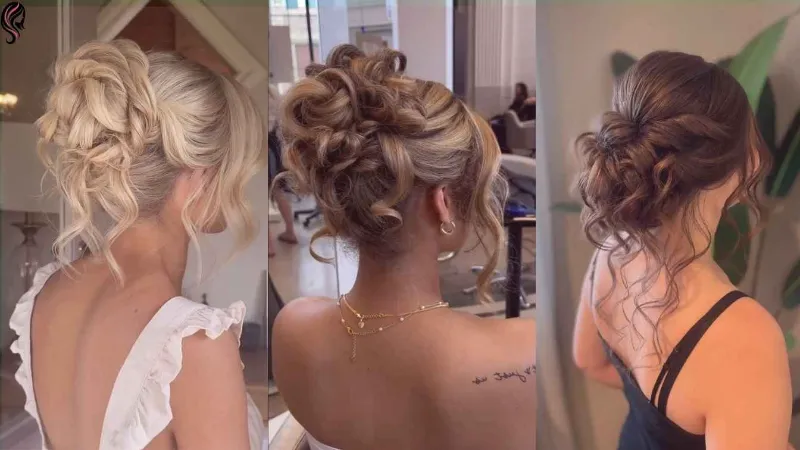
The messy bun has earned its place as one of the most versatile hairstyles of the decade equally at home on a gym morning, a Sunday brunch, a work meeting, or a black-tie event with the right accessories. Its appeal lies in the balance between casual ease and intentional style. When done well, it frames the face, elongates the neck, and takes under three minutes. When done poorly, it just looks like you gave up.
This guide covers nine distinct styles, each with specific technique advice, face shape compatibility, and honest pros and cons. Whether your hair is fine and silky, thick and coily, or somewhere in the frizzy middle, there is a messy bun variation built for your texture. Let’s get into it.
What Exactly Is a Messy Bun?
Effortless, not accidentalWorks all hair texturesUnder 5 minutes daily
A messy bun is an updo hairstyle where hair is gathered loosely at the crown, nape, or mid-level of the head and twisted or coiled into a soft, imprecise bun shape intentionally leaving loose strands, flyaways, or face-framing pieces free. Unlike a polished ballet bun, it embraces texture, movement, and deliberate imperfection.
The key distinction: controlled dishevelment. Real hair stylists describe it as “purposely undone.” The strands that frame your face aren’t accidents they’re placed. The slight lopsidedness isn’t laziness it’s the aesthetic. Understanding this shifts your entire approach from frustration to finesse.
📌 Quick Definition (Featured Snippet): A messy bun is a loose, textured updo where hair is casually swept up and secured with a hair tie or clip, with intentional flyaways and loose strands left free to create an effortlessly stylish, undone look. It can be worn high, low, or at mid-height.
High Crown Messy Bun
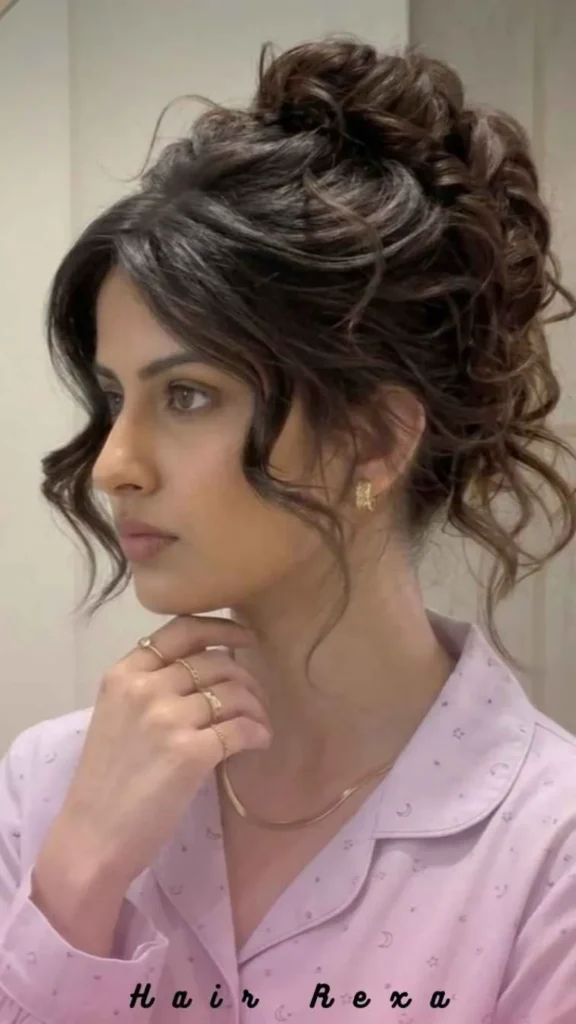
This is the iconic version gathered at the top of the head, voluminous at the base, with a few face-framing strands left loose. It’s the silhouette most people picture when they hear “messy bun.” The high placement lifts the face and creates an elongating effect that flatters nearly every face shape.
To create it properly, flip your hair forward before gathering this pre-loads volume into the bun before you even twist it. Secure with a soft scrunchie rather than a tight elastic, which prevents the flat, pancaked look. Then pull the bun apart gently at the sides with two fingers to expand it outward.
🔧 Pro Tip: Apply a pea-sized amount of hair wax or pomade to your fingertips before fluffing. This gives each pulled section grip so the volume stays throughout the day without collapsing.
Must Read: Layered Haircuts: Simple and Stylish Cuts for Everyday Elegance
Low Nape Bun
Understated Elegance
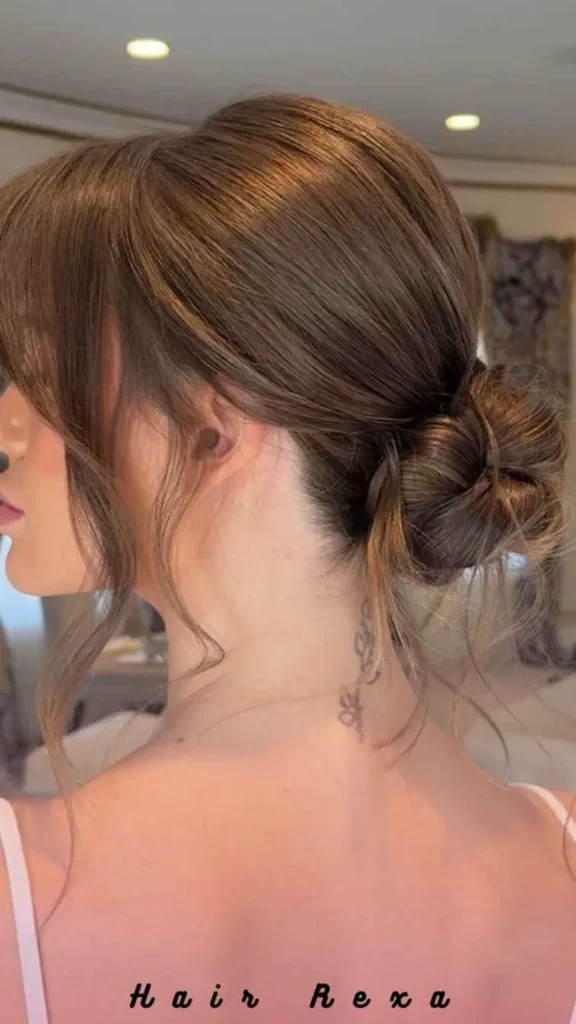
The low messy bun sits at the nape of the neck, giving it an almost Parisian quality like you gathered your hair on the way out the door and somehow looked chic doing it. It works beautifully for fine and medium hair because the lower position creates the illusion of thickness through the folded sections.
Gather hair loosely at the nape don’t smooth it. The imperfections in the gather create natural texture in the bun. Twist once, fold under, and pin with bobby pins rather than an elastic for a more romantic, less structured hold. Leave a few wispy strands along the temples and the back of the ears.
🌿 Real-Life Scenario: Imagine a bride’s rehearsal dinner look: a low nape bun with pearl pins tucked in and baby’s breath woven through. This is how the low messy bun earns its “elegant occasion” credential without a stylist.
Read More: Pixie Cut Hairstyles Ideas for a Clean and Confident Look
Textured Half-Up Messy Bun
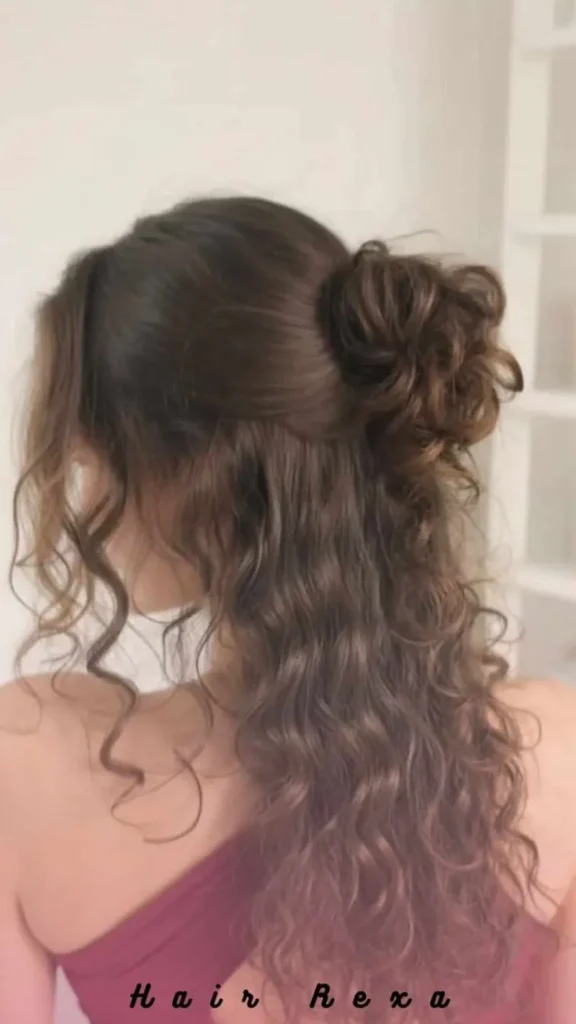
Take only the top half of your hair everything above your ears and create a small, effortless bun at the crown while leaving the rest down. This style became a dominant trend in 2026–2027 because it works for literally every hair length, including the awkward mid-length bob grow-out phase.
The secret to getting this right is texture spray. Apply it before you section, not after. This gives the gathered section enough grip to hold its shape and enough body to avoid looking limp. A texturizing spray like dry shampoo on second-day hair is genuinely the best foundation for this look.
✦ Style Note: This works on every face shape and is particularly forgiving on asymmetrical features. Keep it slightly off-center for a more editorial, current feel.
Read Also: Oval Face Shape Hairstyles for a Modern and Confident Style
Braided Messy Bun
Texture Meets Structure
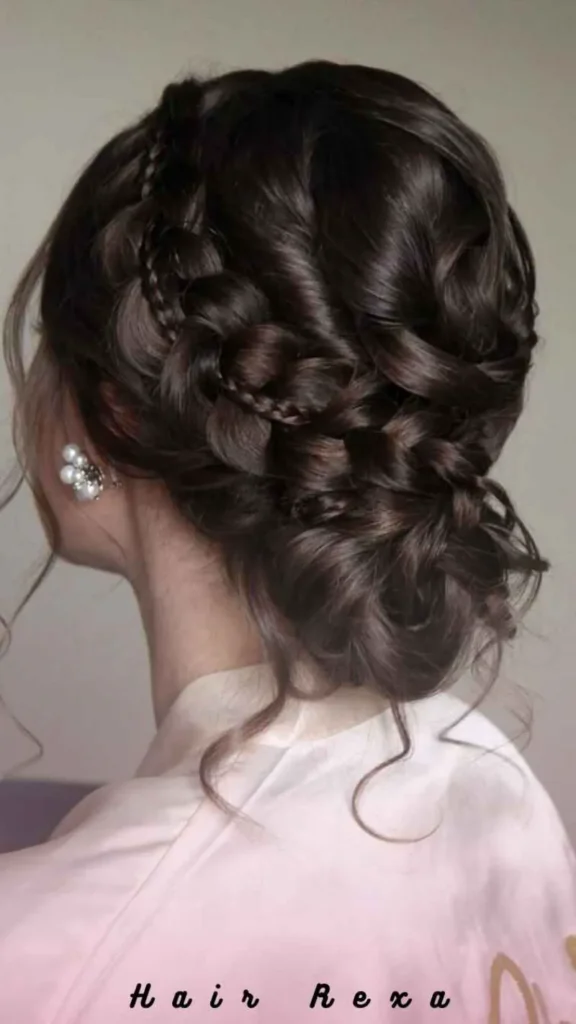
Incorporate one or two small braids into the bun itself either wrapping around the base or folded into the twist. This elevates the messy bun from casual to “casually put-together,” which is exactly the middle ground most people are searching for. It works especially well for medium-thick hair because braids need some substance to look intentional.
Start by creating a loose three-strand braid on one side of your head, then incorporate it into your bun as you gather. Pancake the braid slightly by pulling gently at each section before wrapping a flat, wide braid looks more deliberate and modern than a tight round one.
🌿 Mini Case Study: A hairstylist working with a bride’s party in 2026 noted this was the most requested bridesmaid look it photographs beautifully because the braid catches light and adds dimension that a plain bun can’t achieve.
Don't Miss: Quick Business Casual Hairstyles for Professional Everyday Looks
Curly Messy Bun
Embracing Natural Texture
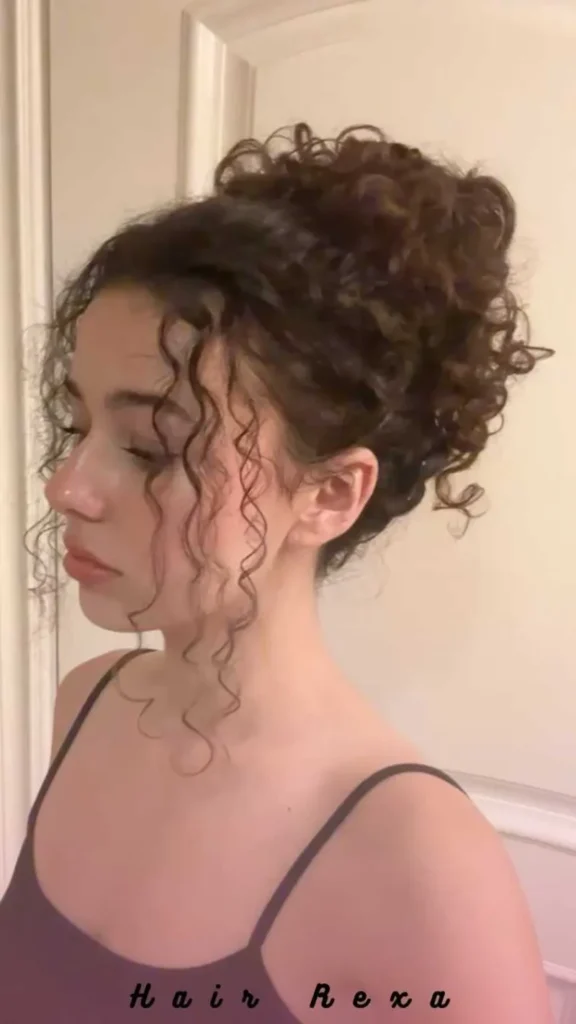
Curly and coily hair textures have a massive advantage with the messy bun the natural shape does 70% of the work. A well-executed curly messy bun has a fullness and dimension that straight hair spends hours trying to fake. The challenge isn’t creating texture; it’s managing it strategically.
Work with day-two or day-three hair for the best results freshly washed curls can be too springy and will shrink in the bun. Gather hair with your hands, not a brush or comb, to preserve curl clumps. Secure loosely at the crown with a satin scrunchie (elastic causes breakage at the hairline on textured hair). Pull the bun apart at the top to create a halo effect of curls around the base.
🔧 Pro Tip: Apply a small amount of curl cream or leave-in conditioner to the front edges before pulling them back. This defines the hairline curls and creates that clean, intentional face-framing effect that distinguishes a styled curly bun from a rushed one.
Side-Swept Messy Bun
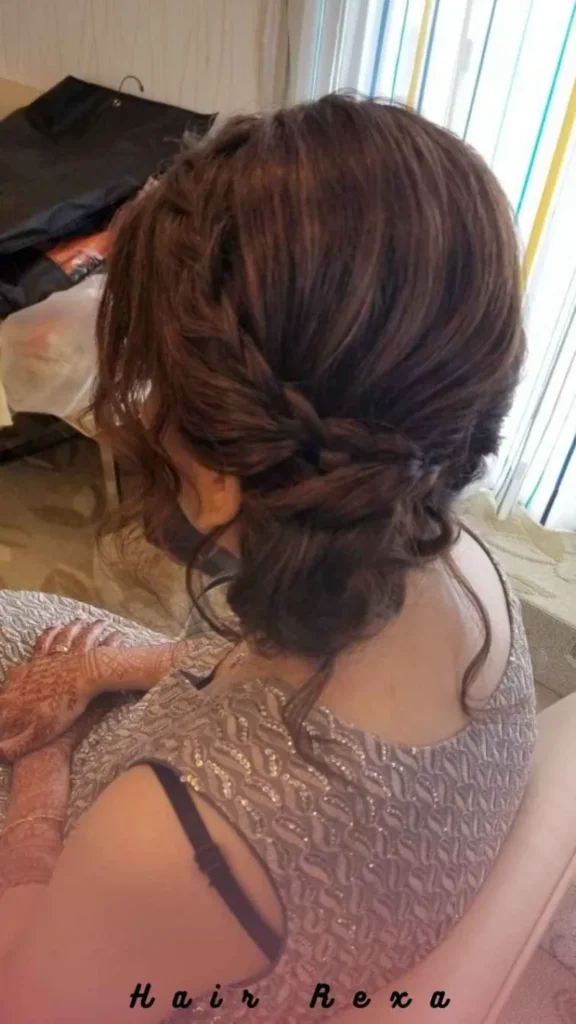
Instead of centering your bun at the crown or nape, pull everything to one side and gather the bun just behind and above your ear. This asymmetric variation immediately reads as more editorial and fashion-forward than its centered counterpart. It also has the practical benefit of keeping your bun visible in front-facing photos.
The positioning should feel slightly off-balance that tension is the whole point. Use a mix of a hair tie for the base and two large bobby pins crossed in an X shape over the bun to secure without flattening. Leave a few strands loose on the opposite side of the face for balance.
✦ Style Note: Most flattering on square and round faces, as the asymmetry creates movement that softens strong jaw angles. Those with heart-shaped faces should keep the loose strands full to balance a narrower chin.
The Accessorized Messy Bun
Style Upgrade in 10 Seconds
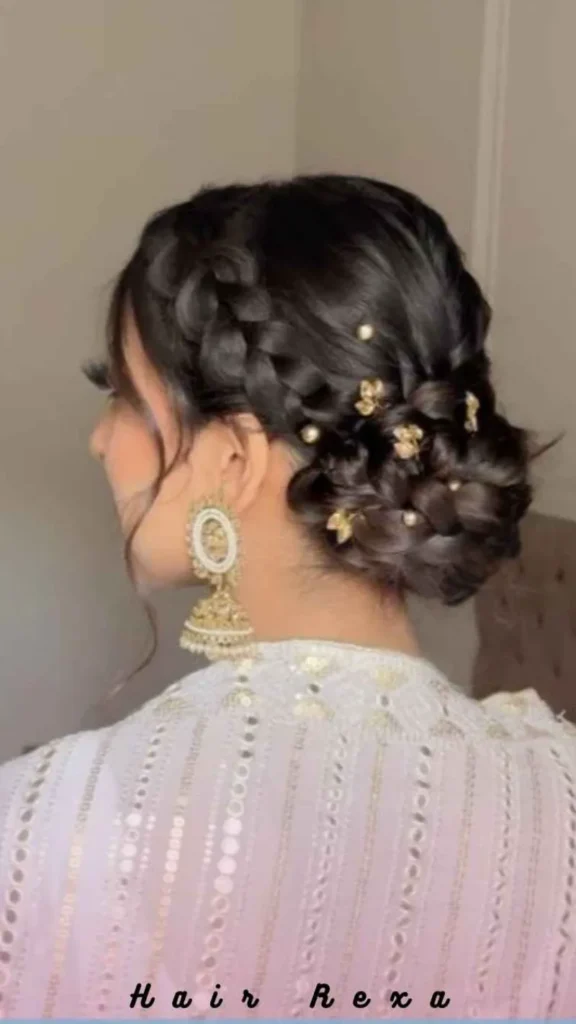
The fastest way to make a messy bun look intentional rather than rushed is a single statement accessory. A claw clip, a silk scrunchie, a pearl pin, or a geometric hair comb placed deliberately in the bun transforms the same structure into something that reads as “chosen” rather than “convenient.” This is not a separate hairstyle it’s a modification that belongs in every messy bun toolkit.
The key is restraint: one accessory, positioned visibly, on a bun that’s already slightly pulled-apart and textured. Two accessories and you’ve lost the casual appeal. Zero accessories on a flat, deflated bun and it just looks tired. The accessory works as punctuation it should end the sentence, not replace it.
🌿 Real-Life Scenario: A content creator with 600K followers documented wearing the same basic high messy bun five days in a row changing only the accessory each day. The posts got twice the engagement of her elaborate styling tutorials, because viewers recognized the real-world usability.
Twisted Rope Bun
Elevated Everyday
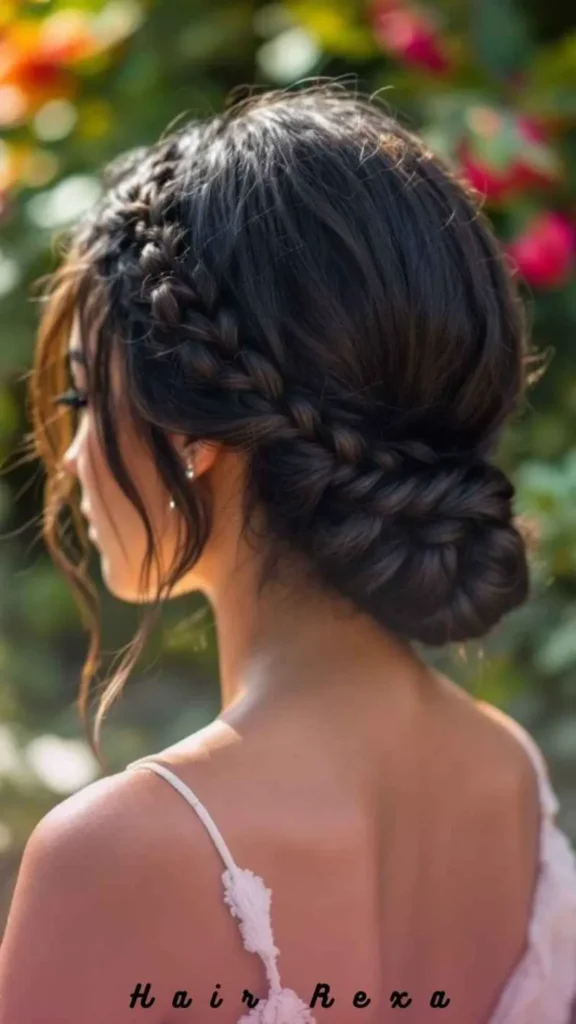
Split your hair into two sections, twist each section individually in the same direction, then twist both sections together in the opposite direction before coiling into a bun. The result is a rope-twist bun that has visible structure and texture without looking deliberate it reads as effortless because the pattern is subtle but present.
This technique is particularly good for fine hair because the double-twist creates physical volume at the base and throughout the bun. Hold each section under light tension as you twist too loose and the rope collapses, too tight and you lose the natural-looking undone quality. Secure with a spin pin rather than bobby pins for longer hold.
✦ Style Note: Ideal for office or professional settings where a completely undone bun might feel too casual. The rope technique provides just enough visual polish to feel appropriate in formal environments.
Overnight Bun Wave Hack
Two Styles, One Night
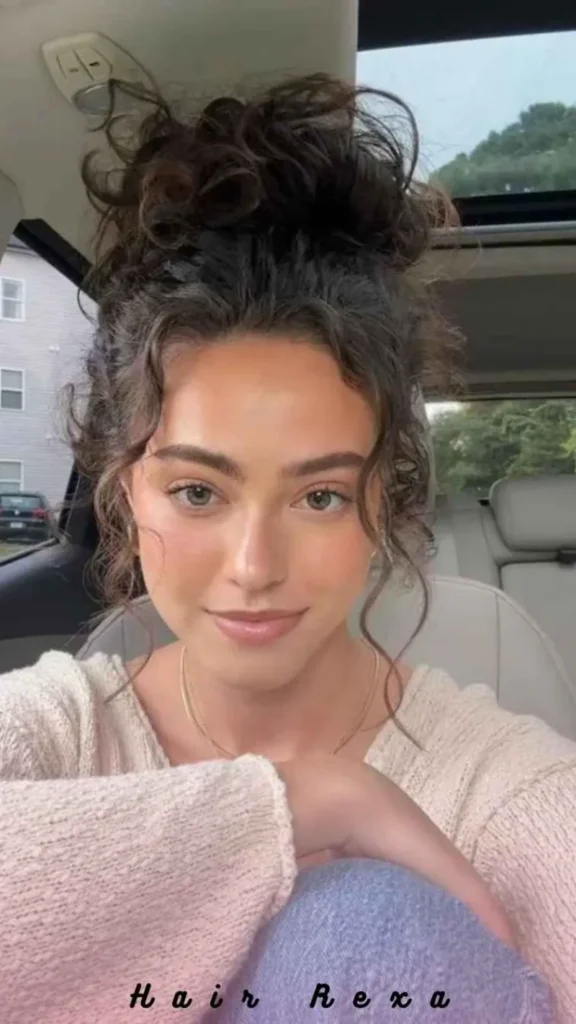
This isn’t just a style it’s a system. Sleep in a loose high messy bun secured with a silk scrunchie. In the morning, release it and you have heat-free waves with natural movement already built in. Choose to wear it down, or re-gather those waves into a fresh, texturally rich messy bun that has far more dimension than anything you could have created starting from scratch.
The overnight method works best on hair that is slightly damp not wet when you gather it for bed. A few drops of a curl-enhancing cream or lightweight oil before gathering will amplify the wave definition by morning. This technique is genuinely unbeatable for second-day styling and works across nearly all hair types except very fine or very straight textures, which tend to drop out overnight.
✦ Style Note: A favorite among minimalists and zero-heat enthusiasts. The wave pattern you get is uniquely your own no two overnight buns produce exactly the same result, which is genuinely part of the charm.
How to Make Your Messy Bun Last All Day
Texture is your anchorGrip beats hold sprayRepair mid-day easily
The most common complaint about messy buns isn’t how to create them it’s how to keep them. Buns that look great at 8am often collapse by noon. The fix is almost always about foundation, not finishing spray. What your hair is like before you gather it determines longevity far more than what products you apply after.
Second-day or third-day hair is genuinely the best base for a lasting messy bun. The natural oils and residual product create texture and grip that freshly washed hair simply cannot replicate. If you’re working with clean hair, apply a volumizing mousse or texturizing spray before you even begin gathering and let it sit for two full minutes before touching it. This brief wait time allows the product to grip the shaft rather than sitting on top of it.
For structural longevity, your choice of hair tie matters enormously. A thick, fabric-covered scrunchie distributes pressure across the ponytail rather than concentrating it at one point this means the base stays rounded and full rather than collapsing inward. For extra security in thick or heavy hair, use a second, thinner elastic underneath the scrunchie. Then use spin pins not bobby pins to secure any sections that feel loose. Spin pins grip in all directions simultaneously, which standard pins cannot do.
🔧 Expert Insight:
Celebrity hairstylist Sam McKnight has noted in interviews that the “secret” to lasting messy buns on editorial shoots is not hairspray but rather strategic teasing at the base before gathering creating micro-friction that acts as a natural anchor throughout the day.
Messy Bun Tips by Hair Type
Fine Hair
Volume is your priorityBackcomb lightly firstAvoid heavy products
Fine hair’s enemy in a messy bun is gravity. Without the weight to anchor itself, fine hair slides out of buns quickly and looks flat rather than artfully undone. The solution: always work with volumizing mousse applied at the roots before gathering, and backcomb the ponytail lightly before twisting into the bun. A little texture spray at the ends of each section you pull apart adds grip without weighing the hair down.
Avoid oil-based products entirely on fine hair before styling they make the hair too slippery to hold. Save any shine-enhancing oil for the very end, applied sparingly to visible flyaways only.
Thick or Coarse Hair
Thick hair has the volume already the challenge is managing bulk and taming the edges. Work with your hair in sections: gather the lower portion first with a temporary clip, then bring the top portion over and secure together. This creates a more even, less lopsided bun shape. For coarse hair specifically, apply a light smoothing cream or anti-frizz serum to the edges before gathering to prevent the hairline from looking puffy.
Wavy or Naturally Textured Hair
Wavy and naturally textured hair is the most naturally suited to messy bun styling the texture creates visual interest without any additional products. The key is to work with curl clumps rather than breaking them apart. Gather hair gently with cupped hands rather than raking fingers through it. Satin or silk scrunchies reduce friction that causes frizz at the hairline.
Still Deciding? Here’s a Quick Comparison
| Hairstyle | Difficulty | Maintenance | Best Face Shapes | Pros | Cons |
|---|---|---|---|---|---|
| High Crown Messy Bun | Easy | Low touch up midday | Oval, Heart, Square | Classic; elongates face; fast | Can droop on fine hair; not for long faces |
| Low Nape Bun | Easy | Low | Oval, Round | Elegant; suitable for formal events | Less visible in photos; can feel tight at nape |
| Half-Up Messy Bun | Easy | Very Low | All face shapes | Works on all lengths; casual and cute | Less polished for formal settings |
| Braided Messy Bun | Medium | Medium re-pin if needed | Oval, Heart, Long | Dimensional; great for events and photos | Takes longer; needs practice |
| Curly Messy Bun | Easy | Low | All face shapes | Uses natural texture; voluminous; damage-free | Needs right day-hair moisture level |
| Side-Swept Messy Bun | Medium | Medium | Square, Round, Heart | Editorial look; fashion-forward; unique | Asymmetry can feel unbalanced if rushed |
| Accessorized Bun | Easy | Very Low | All face shapes | Instantly elevated; no extra technique | Accessory choice matters; easy to overdo |
| Twisted Rope Bun | Medium | Low | Oval, Long, Heart | Office-appropriate; visible structure; holds well | Looser rope bun can unravel on fine hair |
| Overnight Bun Hack | Easy | None (passive) | All face shapes | Zero heat; built-in waves; dual-use | Results vary; won’t work on bone-straight hair |
The Messy Bun Accessory Guide
What Works and Why
Accessories can elevate or ruin a messy bun in equal measure. The difference lies in scale, material, and restraint. A claw clip in a neutral tone (tortoiseshell, black, ivory) reads as both casual and polished making it the most universally wearable choice. Use the claw clip itself as the primary holder, then pull a few strands loose from the clip’s edge. Done.
Silk scrunchies are the workhorse accessory they protect hair from damage, look luxurious, and come in every color and pattern. Wear them at the bun’s base like a traditional hair tie, or loop them once and let the excess fabric hang decoratively. Pearl pins pushed directly into the bun body add a formal-meets-casual elegance that requires no technique whatsoever.
Avoid heavily embellished accessories on an already-textured bun. Rhinestone bands, beaded clips, or over-sized bows compete with the loose, natural quality of a messy bun rather than complementing it. The whole point of the style is an elevated simplicity your accessory should underline that, not contradict it.
Face Shape Guide: Finding Your Best Bun Placement
The same bun placed at different heights can dramatically change how your features read. High buns add vertical length, making them excellent for round faces but potentially overwhelming for long, narrow faces. Low nape buns create horizontal visual weight, which balances wide foreheads and heart-shaped faces elegantly. Mid-height buns gathered at the back of the crown rather than the very top are the most universally flattering option and the easiest starting point if you are unsure of your face shape.
Face-framing strands are the great equalizer. On almost every face shape, leaving two soft tendrils loose at the temples adds softness that counteracts any placement that might otherwise feel too stark. This is why hairstylists rarely pull every single strand back cleanly even in an updo, those few free strands are doing real structural work.
Conclusion
Messy bun hairstyles are uniquely forgiving they reward experimentation and genuinely improve the less “perfect” they look. The nine styles in this guide cover every hair type, face shape, and occasion so there is no reason to keep defaulting to the same flat, defeated version you’ve been wearing for years.
Start with the style that matches your texture and comfort level, and then once it feels automatic layer in one new technique. The accessorized bun, the rope twist, the overnight wave hack. Each one is under five minutes and completely transformative when done with intention.
Practical Expert Tips & Insights
🪮
Never Use a Fine-Tooth Comb
Gathering with your fingers preserves natural texture and prevents static. Combs strip the texture you actually need for the messy bun to hold.
💧
The 2-Second Spritz Rule
If your bun looks too flat or too smooth, a fine mist of water at the bun itself, then reshaping with fingertips, revives texture in under 30 seconds.
📍
Strategic Flyaway Use
Don’t fight every flyaway. Place two or three around your face intentionally and smooth the rest. This is the single biggest visual upgrade possible.
🌙
Sleep in a Loose Bun
Use a silk or satin pillowcase, and secure a loose high bun with a gentle scrunchie before sleep. Wake up to built-in texture and a refreshed style base.
✂️
Short Layers Help Enormously
Ask your stylist for long face-framing layers on your next cut. These naturally fall free from buns and create the intentional loose-strand look automatically.
🪢
The Double-Elastic Trick
On your second twist of the hair tie, stop halfway so the tail fans out behind the elastic. Spread it slightly this creates instant bun shape without any additional steps.
FAQ’S About Messy Bun Hairstyles
How do I make a messy bun that doesn’t fall out?
Start with textured, second-day hair. Use a thick scrunchie as the primary anchor, apply one or two spin pins into the bun body, and avoid heavy oils before styling. Finish with a light-hold hairspray only if needed texture and grip do more than spray ever will.
Can I do a messy bun with short hair?
Yes, with some adaptation. A half-up messy bun works for chin-length hair. For shorter bobs, a small textured twist pinned at the back of the crown achieves the same aesthetic with less length requirement. Clip-in pieces or banana clips can simulate the look for very short lengths.
What products are best for a messy bun?
Texturizing spray before gathering, a flexible pomade or wax for pulling sections, and a lightweight hairspray or mousse for hold. Avoid thick gels or heavy oils they weigh hair down and prevent the volume and movement that make messy buns work.
Is a messy bun bad for your hair?
Tight elastics and repetitive placement in the same spot can cause breakage over time. Use soft fabric scrunchies, vary your bun placement slightly each day, and never sleep in a tight elastic. These three habits eliminate virtually all bun-related hair damage risk.
What’s the best messy bun for thin hair?
The twisted rope bun or the overnight bun wave hack work best for thin hair, as both techniques create structural volume before the bun is even formed. Avoid very high buns on thin hair as the weight tends to pull and flatten the base quickly.


