
Beautiful Straight Hairstyles That Are Simple to Create

Straight hairstyles are one of the most universally flattering categories in hair fashion yet most people never get the full range of what they can do. Whether your hair is naturally pin-straight, chemically relaxed, or heat-styled daily, the right straight hairstyle can completely change how you look and feel in under 30 minutes.
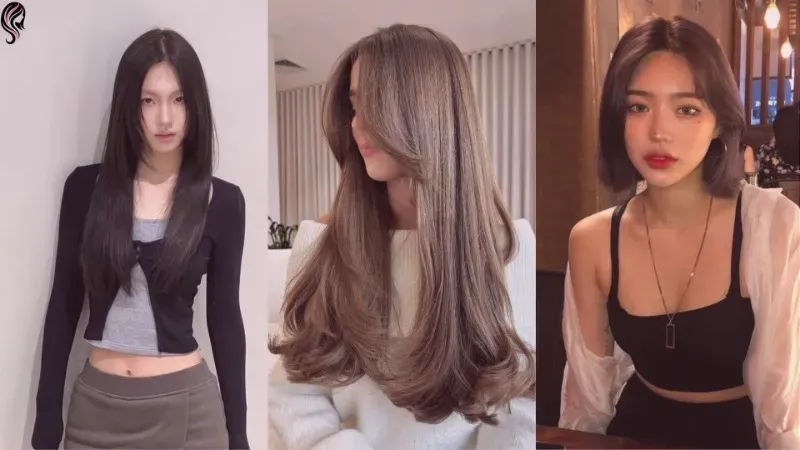
The truth? Most style guides list looks without telling you why they work or how to make them last. This guide fixes that. Below, you’ll find distinct straight hairstyles, each with honest styling notes, expert tips, and real context on who they suit best so you can choose with confidence, not guesswork.
The Classic Sleek Straight
Timeless · Polished · Versatile
✦Effortlessly polished daily look
✦Works every hair length
✦Office-to-event ready
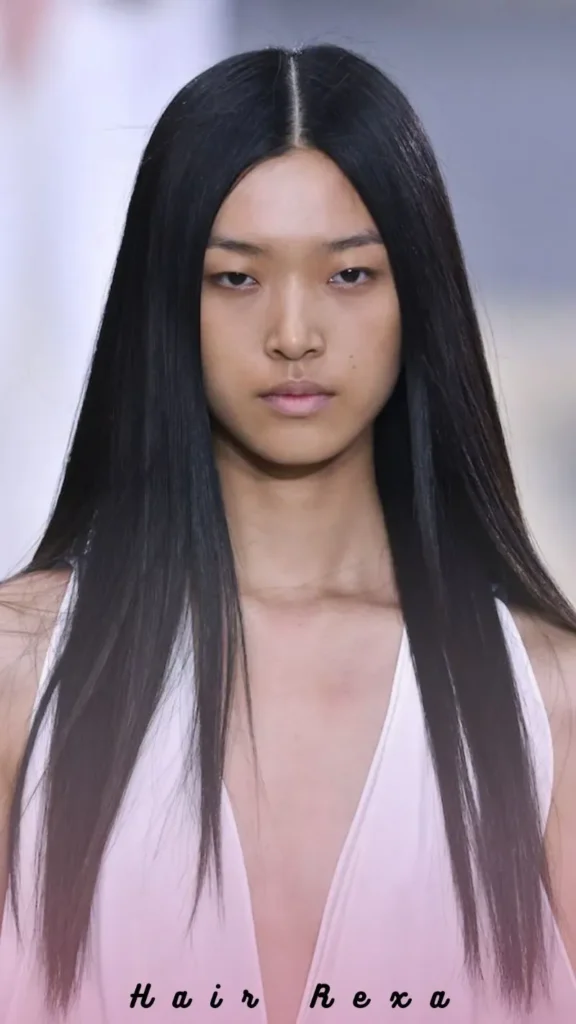
The classic sleek straight is the gold standard of straight hairstyles minimal in concept but unforgiving in execution. It features hair that lies completely flat, smooth from root to tip, with a high-shine finish. Think of the kind of blowout you see on a well-shot magazine cover.
This style works best on hair with medium density. If your hair is very fine, you may find it looking limp by midday. If it’s extremely thick, the weight can work in your favour, helping strands lie flat naturally. The key product here is a lightweight serum applied before heat styling, not after applying too late traps oil on the surface instead of protecting the strand.
For the best result, use a flat iron at 375–400°F and pull the hair in one smooth, slow pass. Multiple fast passes break down the cuticle faster without adding any extra smoothness. Finish with a shine spray held 12 inches away any closer creates product buildup.
Style Note
This works across oval, square, and heart-shaped faces. For round faces, add a slight side part to elongate features. Keep the top slightly voluminous at the crown before smoothing down this avoids a helmet-like flatness.
Must Read:
Straight with a Blunt Bob
Structured · Modern · Low-Maintenance
✦Sharp lines, bold statement
✦Top trending in 2026
✦Ideal for fine hair volume
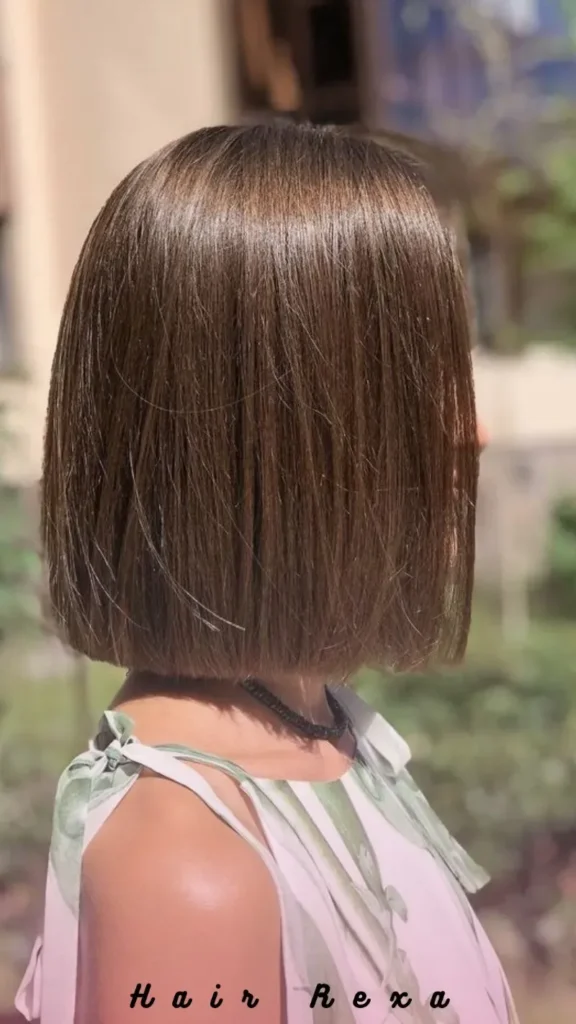
A blunt bob paired with a straight finish is one of the most architectural hairstyles in mainstream fashion right now. The cut itself creates a clean horizontal line at the jaw or chin, and the straight styling keeps that geometry intact. It’s a look that communicates precision without trying too hard.
What makes this style stand out is how the blunt cut removes weight distribution taper at the ends, making hair appear fuller. This is especially beneficial for people with thin or fine straight hair who find most other styles look flat. The straight finish prevents the ends from curling out and breaking the clean silhouette the cut is designed to create.
Pro Tip
Use a ceramic flat iron for the blunt bob rather than tourmaline. Ceramic distributes heat more evenly, which is critical for maintaining that precise, uniform edge from ear to ear.
Read More: Short Haircut Ideas That Make Fine Hair Look Thick and Beautiful
Straight Lob (Long Bob)
Effortless · Transitional · Universally Flattering
✦Most flattering length overall
✦Easy to style and maintain
✦Suits all face shapes
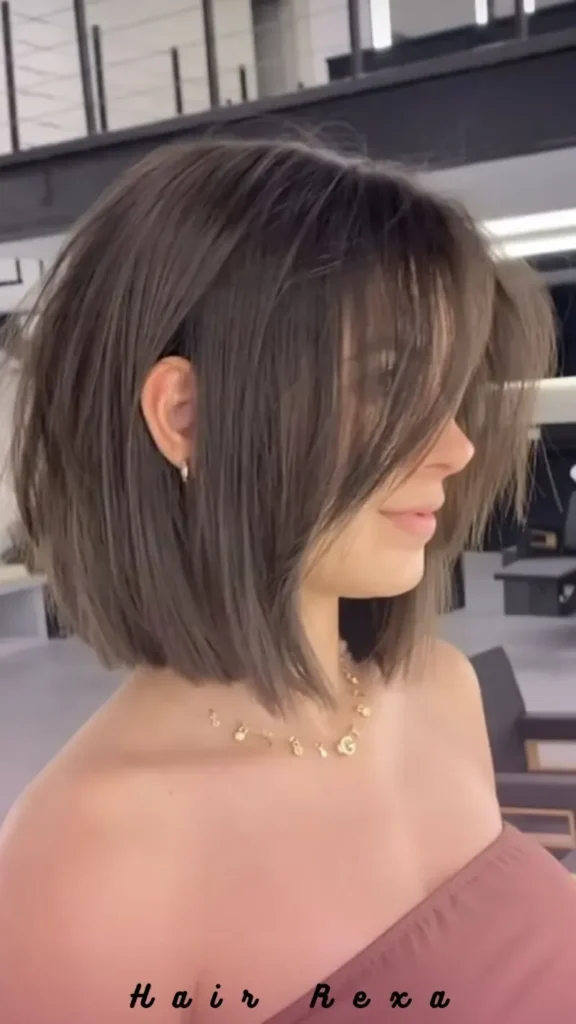
The straight lob a long bob hitting between the collarbone and shoulder is the most universally recommended length by professional stylists for a reason. It falls in the sweet spot where the style is easy to manage but long enough to create movement and versatility. Worn straight, it has an effortless polish that reads as put-together without looking overly formal.
A common scenario: someone who wants to cut their long hair but doesn’t want anything too dramatic. The straight lob is often the answer. It frames the face at a length that flatters most face shapes, and straight styling keeps it looking intentional rather than just “grown out.” Celebrity examples include the enduring lob moments seen across fashion weeks each year it never fully goes out of style.
Style Note
Ask for the cut to be slightly longer in the front than the back about half an inch of angle creates movement and prevents the look from appearing flat when you’re in motion. This subtle gradient reads as depth when the hair is straight.
Read Also: Curtain Bangs Hairstyles That Instantly Upgrade Your Everyday Look
Straight with Face-Framing Layers
Dimensional · Soft · Face-Enhancing
✦Adds depth to flat hair
✦Works with any length
✦Flatters all face shapes
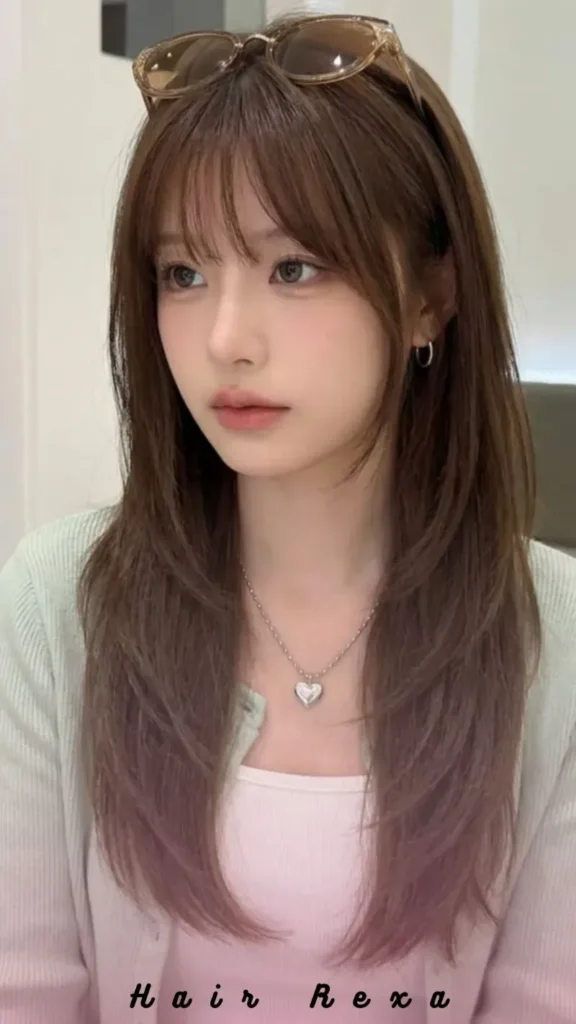
Pure straight hair without any layering can sometimes look one-dimensional it all falls in a single curtain with no variation. Face-framing layers solve this by adding shorter pieces around the front of the head that create a slight V-shape or curtain effect when worn straight. The result is a straight style with visible dimension and movement without any wave or curl.
This style is particularly effective for people with very thick or dense hair. The layers don’t remove bulk, but they create visual interest that stops the hair from looking like a flat wall. Real-world scenario: clients who get straight blowouts every week often add face-framing layers specifically because it breaks up the monotony of a single-level straight look while keeping the sleekness they love.
Pro Tip
When straightening layered hair, section it more finely than you think you need to. Layers that don’t get fully straightened create visible texture inconsistencies the very opposite of the sleek look you’re going for.
Explore: Old Money Hairstyles for a Soft, Elegant, and Polished Everyday Look
Straight Pixie Cut
Bold · Edgy · Ultra-Low Maintenance
✦Zero daily styling needed
✦Makes features pop visually
✦Cuts styling time by 80%
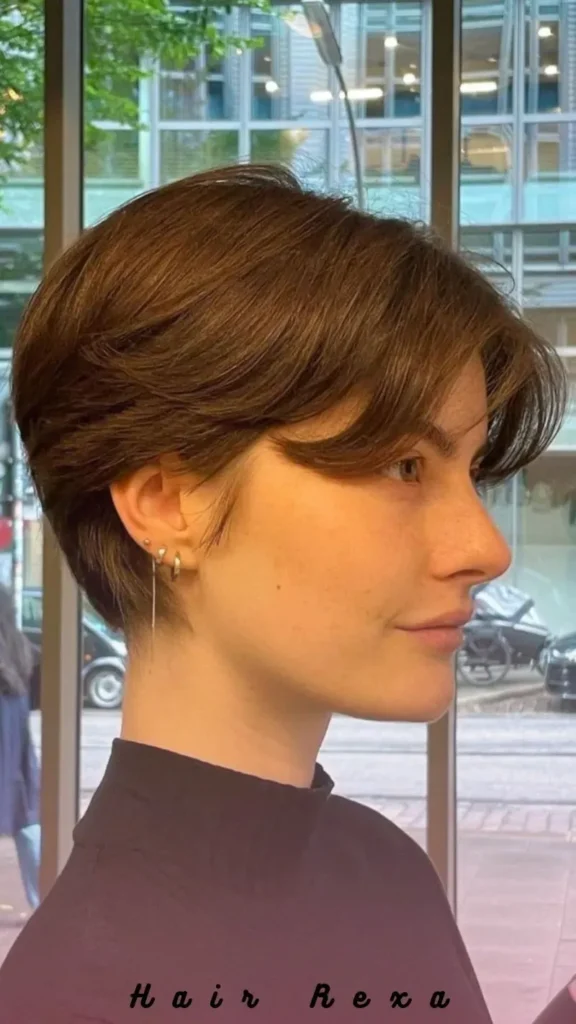
A straight pixie cut is perhaps the most precise and intentional of all straight hairstyles. The style demands clean, defined lines at the nape, the ears, and the temples. Worn straight, it accentuates the cut’s structure rather than relying on texture for visual interest. The result is sharp, confident, and requires the least daily effort of any look on this list.
The common fear is that a pixie cut requires constant salon trips to maintain. In reality, a well-executed pixie with straight hair needs about 4–6 weeks between trims, similar to medium-length styles. Skipping trims doesn’t ruin it as dramatically as people expect it just shifts from a “defined pixie” to a “growing-out textured crop,” which is itself a viable straight style at that length.
Style Note
A straight pixie works best for oval, oblong, and heart-shaped faces. It can make round faces appear wider, though a longer-top variation of the pixie (sometimes called a “textured crop”) can counteract this by adding height. Always consult your stylist about face shape before committing.
Read More: Wispy Bangs Hairstyles Ideas for Effortless Everyday Beauty
Middle-Part Straight Hair
Minimal · Symmetrical · Trend-Forward
✦Defines symmetry instantly
✦Dominant on social media
✦Pairs with any length
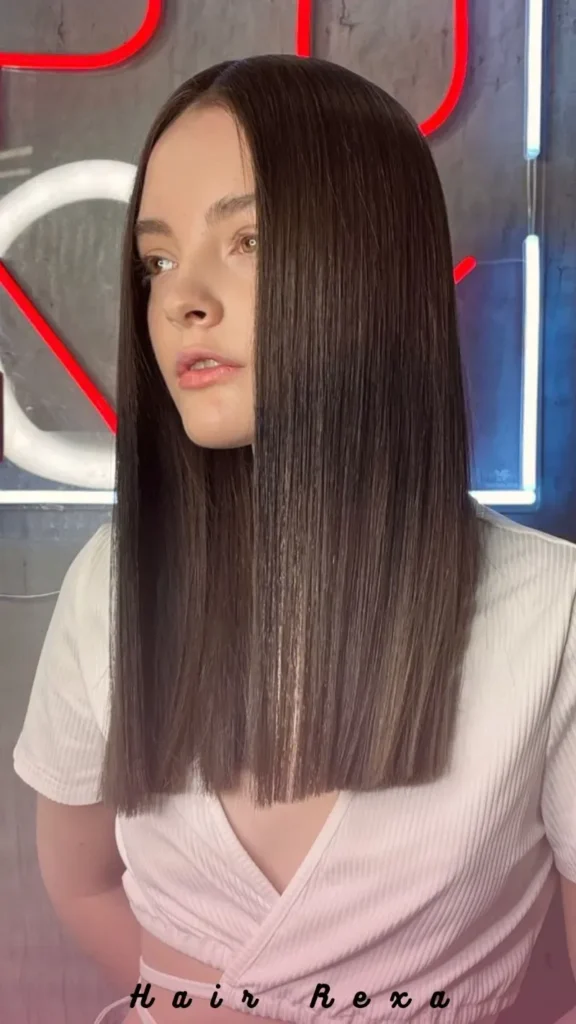
The middle part has been one of the most dominant straight-hair styling choices across social media and runways for the past several years, and it’s showing no signs of slowing down. When paired with perfectly straight hair, the middle part creates a balanced, symmetrical frame around the face that reads as both minimal and intentional. It’s the styling equivalent of choosing not to over-design something.
The middle part works because straight hair enhances its clean geometry any wave or curl visually breaks the symmetry the part creates. This is why middle-part styles almost always default to straight or very slightly blown-out hair in fashion contexts. An important distinction: a hard middle part involves slicked-back sections, while a soft middle part allows hair to fall naturally from center both are valid and suit different aesthetics.
Pro Tip
Apply a small amount of edge gel or slick-back serum directly along the part line only not across the entire head. This keeps the part crisp without weighing down the rest of the hair’s body and movement.
Straight Hair with Side-Swept Bangs
Romantic · Approachable · Classic
✦Balances strong features softly
✦Perennially in fashion
✦Adjustable to any face
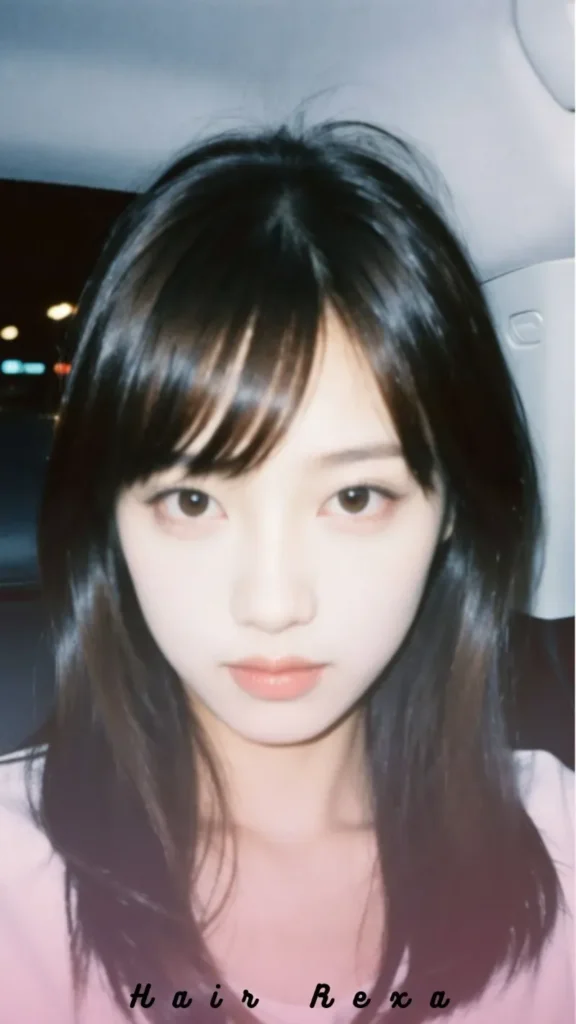
Side-swept bangs with straight hair create one of the most universally flattering combinations in hairstyling. The bangs add a diagonal element that breaks up the otherwise vertical plane of straight hair, immediately creating visual interest at the face without needing any texture or curl. It’s a style that can look equally at home at a job interview or a dinner party.
What separates this from basic straight hair is the deliberate asymmetry. The sweeping angle of the bangs draws the eye across the face rather than straight down, which is particularly effective for softening angular features or adding perceived width to narrower faces. For someone transitioning from curtain bangs back to a parted style, side-swept bangs are the perfect intermediate stage they blend seamlessly with growing-out layers.
Style Note
Side-swept bangs work on almost every face shape. For square faces, sweep them toward the softer side of the face to draw attention away from the jawline. For round faces, a deeper side part with longer bangs creates an elongating effect.
Straight High Ponytail
Sleek · Sporty · Instantly Polished
✦Lifts and elongates the face
✦Works for gym or gala
✦5-minute styling payoff
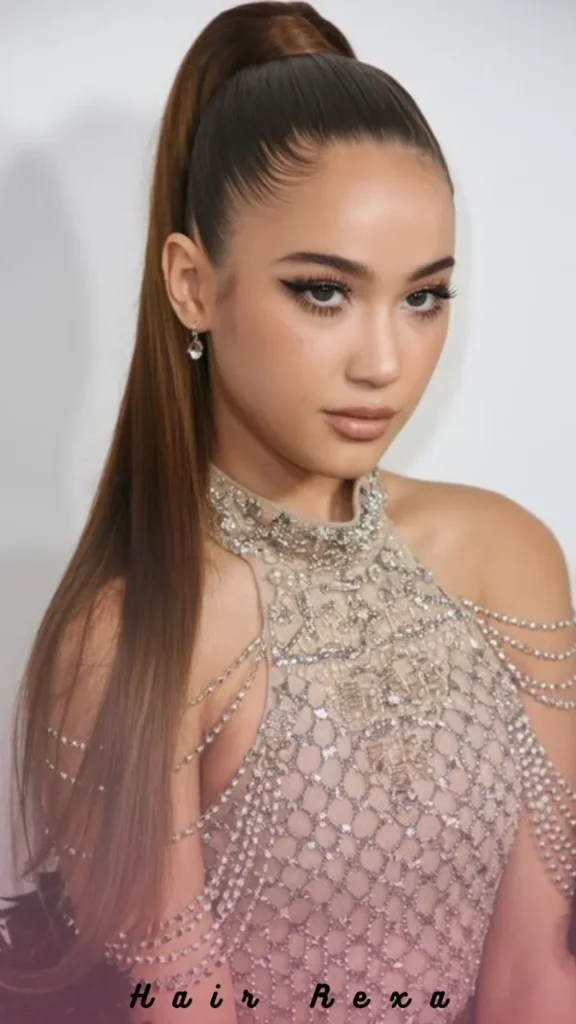
A straight high ponytail is one of the most effective style transformations achievable in under five minutes. When the hair is straight and smooth, the ponytail reads as deliberately styled rather than thrown together a distinction that makes all the difference in professional or social settings. The key is the smoothness of the roots leading up to the ponytail base.
This style is especially impactful for textured or naturally curly hair that has been heat-straightened. The contrast between a sleek ponytail base and a flowing straight fall creates a striking silhouette. One practical tip from editorial hairstylists: wrap a small piece of hair around the elastic band and secure with a pin. This single detail elevates the entire look from gym-ready to runway-ready.
Pro Tip
Apply a small amount of gel or pomade along your hairline before pulling hair up. This smooths baby hairs and flyaways at the root without needing to flat iron close to the scalp, which is one of the leading causes of hairline breakage.
Straight Hair with Curtain Bangs
Trendy · Soft · ’70s-Inspired
✦The decade’s most requested bang
✦Frames without overpowering
✦Grows out beautifully
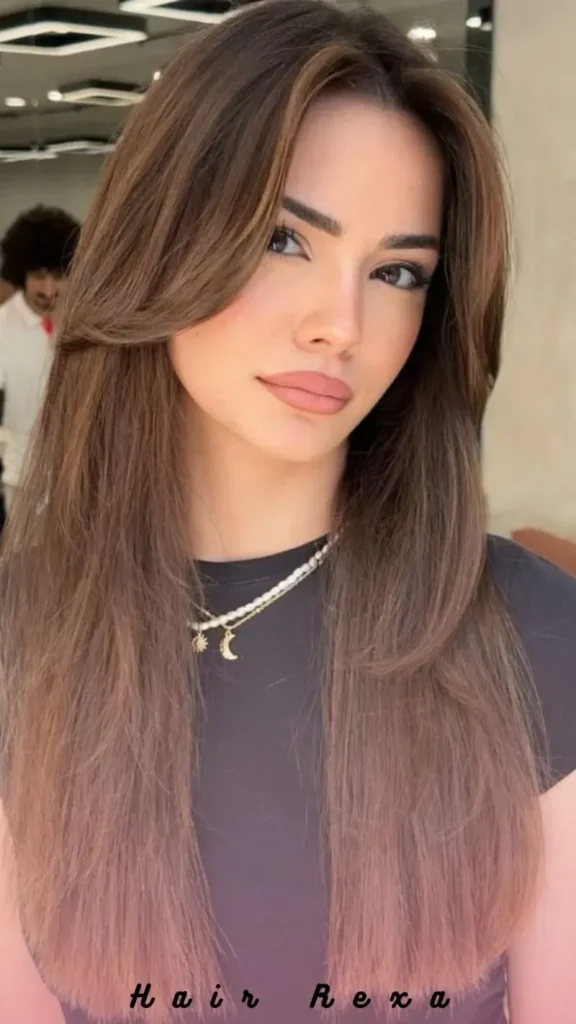
Curtain bangs paired with straight hair have been one of the defining hairstyle trends of the 2020s. Unlike blunt bangs, curtain bangs are parted in the center and taper to longer lengths at the sides, creating a “curtain” effect that frames the face without covering the forehead entirely. When worn with straight hair, the effect is soft but intentional a look that nods to 1970s aesthetics while feeling thoroughly modern.
The reason curtain bangs have exploded in popularity is their adaptability. They grow out gracefully, blending into face-framing layers rather than an awkward in-between stage. For people hesitant about committing to bangs, this characteristic makes them the lowest-risk option. On straight hair specifically, curtain bangs require minimal product a light serum and a round brush is typically all you need to keep them in their signature swept position.
Style Note
Curtain bangs work best when they start no farther back than the top of the head’s natural curve. Bangs that start too far back lose the “curtain” framing effect. Ask your stylist to keep the shortest point no shorter than eyebrow length for maximum versatility.
Straight Layered Hair (Long)
Flowing · Dimensional · Effortlessly Chic
✦Classic long-hair staple
✦Prevents bulk and heaviness
✦Lightens thick hair beautifully
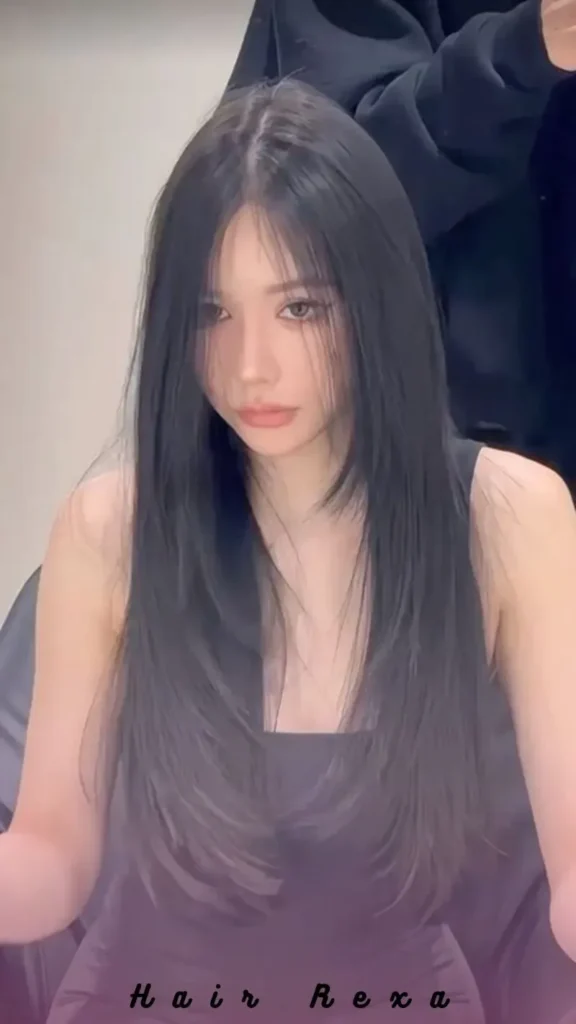
Long straight hair with layers is a perennial staple for a very simple reason: it solves the two most common problems with long straight hair simultaneously. First, it removes excess weight and bulk that can make very thick hair look heavy and flat. Second, it adds visible movement and dimension so the hair doesn’t hang as a single, lifeless curtain. The layers aren’t visible as distinct sections they reveal themselves as slight variations in length and flow as the hair moves.
This style is particularly well-suited for people with naturally straight hair who want to keep length but struggle with flatness at the crown. When the hair is straight and layered, the crown area has more life because shorter underlayers push the longer top layers upward slightly. This is the same principle that stylists use when creating “hidden layers” or “internal layers” cutting underneath rather than on top to preserve the sleek surface appearance.
Pro Tip
Use a boar bristle brush for your final blowout pass on layered long hair. The bristles smooth the cuticle better than a paddle brush, distributing natural oils along the entire shaft this gives a naturally glossy result that products alone cannot replicate.
Straight Hair with Deep Side Part
Glamorous · Old-Hollywood · Statement
✦Instantly glamorous, always classic
✦Hollywood golden-era comeback
✦Great for special occasions
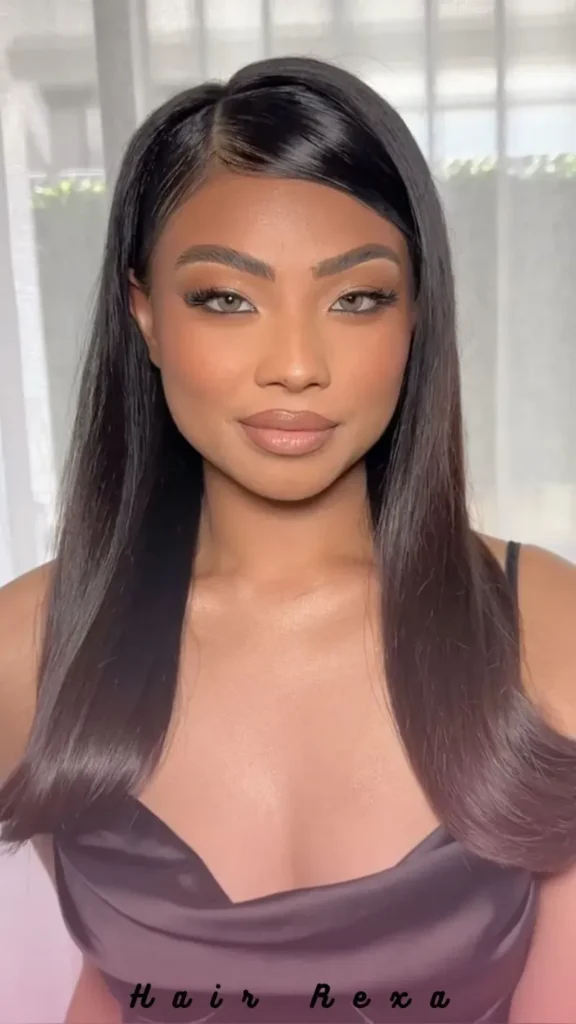
A deep side part with straight hair channels old-Hollywood glamour in a way no other parting style can. By shifting the part significantly to one side typically above one eyebrow rather than the natural part you create an asymmetrical silhouette that dramatically changes the proportions of your face. On straight hair, this has a sleek, editorial quality that looks elevated without requiring any additional styling complexity.
The deep side part is experiencing a genuine revival after years of the middle part dominating. Fashion stylists are increasingly reaching for it when they want a contrast to the symmetrical aesthetic of the past few years. A real-world application: people with very fine hair often find that a deep side part creates the illusion of far more volume at the crown than a middle or natural part the section of hair that crosses over the parting adds an extra layer of visual density right where flatness typically occurs.
Style Note
The deep side part can visually widen narrow faces and elongate rounder face shapes, depending on which side you part to. For best results, experiment in front of a mirror with the part on both sides most people find one side more naturally flattering than the other based on their unique facial structure.
Still Deciding? Here’s a Quick Comparison
Compare all 11 straight hairstyles side-by-side to find your best match
| Hairstyle | Best Hair Type | Styling Time | Maintenance | Best For | Key Benefit |
|---|---|---|---|---|---|
| Classic Sleek Straight | Medium density | 20–30 min | Medium | Any occasion | Maximum shine & polish |
| Blunt Bob | Fine to medium | 15–20 min | Medium | Modern, structured look | Creates volume in fine hair |
| Straight Lob | All types | 15–25 min | Easy | Everyday versatility | Universally flattering |
| Face-Framing Layers | Thick/dense hair | 25–35 min | Medium | Adding depth to flat hair | Dimension without curl |
| Straight Pixie | Fine to medium | 5–10 min | Easy | Low-maintenance living | Minimal daily effort |
| Middle-Part Straight | All types | 20–30 min | Easy | Minimalist aesthetic | Symmetrical, editorial |
| Side-Swept Bangs | All types | 20–25 min | Medium | Softening angular faces | Romantic, approachable |
| High Ponytail | All lengths | 5–10 min | Easy | Quick polish | Face-lifting silhouette |
| Curtain Bangs | Medium to thick | 20–30 min | Medium | Soft framing | Grows out gracefully |
| Straight Layered (Long) | Thick/coarse | 30–40 min | Medium | Reducing bulk in long hair | Light, flowing movement |
| Deep Side Part | Fine to medium | 20–30 min | Easy | Special occasions | Old-Hollywood glamour |
Conclusion
Straight hairstyles are some of the most adaptable, timeless, and universally flattering looks in hair styling but only when you choose the right one for your hair type, face shape, and lifestyle. From the ultra-low-maintenance pixie to the glamour of a deep side part, every style on this list delivers something distinct.
The biggest mistake people make is treating “straight hair” as a single style. As this guide shows, there are at least 11 meaningfully different approaches each with its own character, technique, and ideal wearer. Now that you have the information, the next step is yours.
Practical Tips & Expert Insights
Always Use a Heat Protectant
Apply before any heat tool, not after. A protectant applied to already-dry hair provides almost zero benefit. The goal is coating the strand before moisture evaporates.
Section Hair Properly
Thin sections equal a smoother result. Most people over-load the flat iron. Sections no thicker than half an inch give more heat contact and longer-lasting straightness.
Finish with Cold Air
After blow drying, switch to the cool setting for 30 seconds on each section. Cold air sets the cuticle flat, locking in the style and reducing frizz reactivation from humidity.
0Silk Pillowcase at Night
Sleeping on cotton creates friction that roughens the hair cuticle and causes frizz by morning. A silk pillowcase is the single cheapest overnight investment for maintaining straight styles.
Dry Shampoo at the Roots
Apply dry shampoo the night before not the morning of. It absorbs oil overnight and is easier to brush out, giving a much more natural finish than morning applications.
Anti-Humidity Spray is Non-Negotiable
In humid climates, straight styles need a barrier product. Apply a lightweight anti-humidity spray as a final step this is what separates a 2-hour result from an 8-hour one.
FAQ’S About Straight Hairstyles
What is the most low-maintenance straight hairstyle?
The straight pixie cut is the lowest-maintenance straight hairstyle overall, requiring minimal daily styling typically just product application and a quick comb. For longer hair, the straight lob with minimal layers is the easiest to maintain because it falls naturally into shape after washing.
How do I keep straight hair straight in humidity?
Use a combination of three steps: a keratin-based smoothing serum before heat styling, a high-hold thermal protectant during styling, and an anti-humidity or anti-frizz finishing spray after. The final spray creates a surface barrier that resists moisture absorption the primary cause of frizz in straight styles.
Which straight hairstyle is best for thick hair?
Long layered straight hair or straight hair with face-framing layers works best for thick hair. Layers reduce the visual weight without removing the actual density. A blunt bob can also work well for thick hair because the weight of the cut is balanced across all strands evenly.
Can naturally curly hair be worn in straight hairstyles long-term?
Yes, but with proper care. Daily or frequent heat styling without adequate protection causes cumulative damage over time. Use a high-quality heat protectant rated above 450°F, keep flat iron temperature at or below 400°F, and incorporate weekly deep conditioning treatments. Keratin treatments are also a popular option for reducing heat styling frequency.
What straight hairstyle is best for a round face?
Long straight hair with layers, a deep side part, or side-swept bangs are the most flattering for round faces. These styles create vertical lines and asymmetry that visually elongate the face. Middle parts and blunt bobs that hit at the jaw can emphasize width in round faces.
How long do straight hairstyles typically last?
Depending on hair type and environmental conditions, a heat-styled straight look typically lasts 1–3 days. Fine hair may need refreshing after one day, while coarser hair holds straight styling longer. Dry shampoo, sleeping on a silk pillowcase, and loose hair ties overnight significantly extend the life of any straight style.
Hi! I’m Mira Carter, founder of Hair Rexa with 8 years of experience in hair care and styling. I share simple tips, hairstyle ideas, and expert guidance to help you keep your hair healthy, strong, and looking fabulous every day.


