
Curly Hairstyle Ideas for Effortless Styling and Volume

Curly Hairstyle Ideas are creative suggestions and styling options designed for naturally curly or wavy hair. They help people choose simple or stylish looks that match different face shapes and occasions. The main purpose is to enhance natural curls, improve manageability, and give a fresh, confident appearance. Curly Hairstyle Ideas means different ways to style curly hair for beauty, comfort, and easy daily maintenance. Curly hair needs special care, and these ideas guide users toward suitable and attractive results.
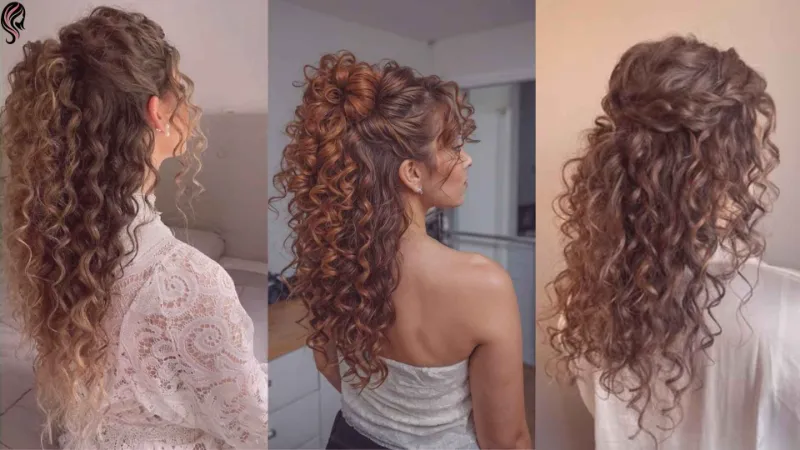
These ideas focus on reducing frizz, improving curl definition, and making daily styling easier. Many people look for simple routines that save time while still keeping hair stylish and neat. These styles also support hair health by avoiding excessive heat and chemical damage. With the right approach, curly hair becomes more manageable, soft, and naturally beautiful for everyday wear or special events.
Understanding Your Curl Type Before Choosing a Style
Before choosing a hairstyle, you need to understand your curl classification. The Andre Walker Hair Typing System Types 2 (wavy), 3 (curly), and 4 (coily) remains the most practical framework. Within each type, subcategories like 3A, 3B, 3C describe spring diameter, and these details directly affect which styles hold well and which fall flat by noon.
Curl density (how many hairs per square inch) and porosity (how well your hair absorbs moisture) matter just as much as curl type. A person with high-porosity 3C hair will need different styling products and techniques than someone with low-porosity 3C curls, even if the resulting styles look similar on the outside.
Knowing your curl type also saves time in daily styling. You can choose products and routines that match your hair needs. This makes your hair look healthy and defined. Many people use this step before trying new Curly Hairstyle Ideas to make sure the style will actually work for their natural texture. It helps you get better results with less effort.
Real-life scenario: Aisha, a Type 4A natural, spent months trying a layered bob she saw on a Type 3B influencer. It consistently fell flat on her. Once she understood her curl’s higher density and shrinkage factor, she adapted the same bob with more layers and a diffuser technique and the style transformed completely.
The Curly Bob with Defined Layers
Style: Defined + Polished
Difficulty: Medium
Best for: Types 3A–4A
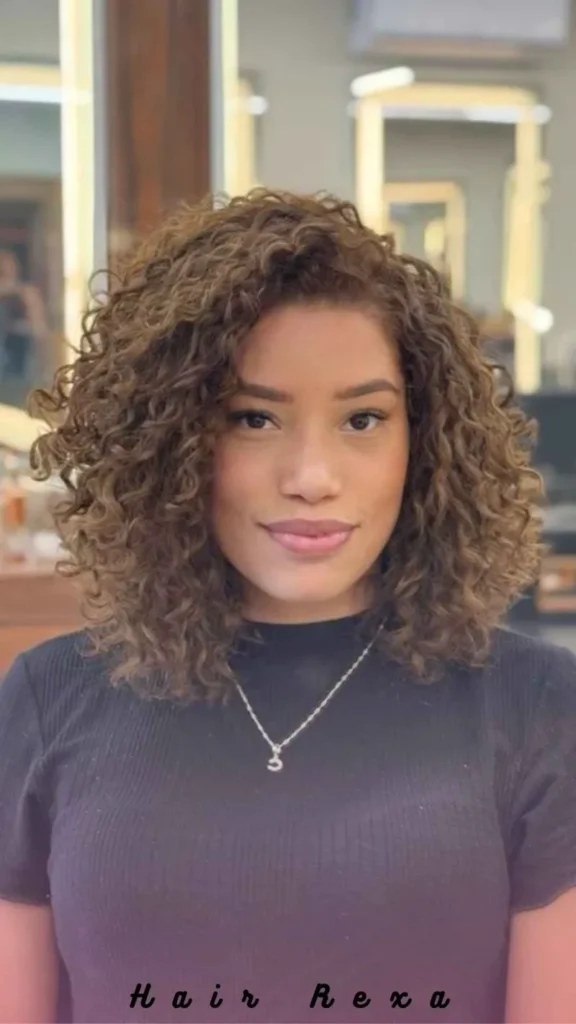
The curly bob is a perennial favourite for good reason it removes bulk at the ends, reduces weight-induced straightening, and frames the face beautifully. The key difference from a straight bob: curly bobs should be cut dry and curl-by-curl to account for shrinkage. A wet cut will always leave curly-haired clients surprised (and not in a good way) by how short the style actually sits.
For Types 3A–4A, ask your stylist for a “DevaCut” or similar dry-cutting technique. Request invisible layers throughout to add movement without sacrificing fullness at the crown.
Style note: Pair with a deep side part for asymmetrical drama, or a centre part for a cleaner editorial feel.
Must Read: Trendy Ponytail Hairstyles for a Fresh and Modern Look
The Wash-and-Go (Done Right)
Style: Natural + Effortless
Difficulty: Easy
Best for: Types 3B–4C
The wash-and-go is the holy grail of curly styling effortless in theory, nuanced in execution. The method involves applying product to soaking wet hair to lock in hydration and curl definition before the hair dries. It works best for Type 3B to 4C hair when paired with a gel over a leave-in conditioner to create the “cast” that controls frizz.
Most people fail the wash-and-go because they skip the praying hands method or try to scrunch too early. The cast should harden fully before you “scrunch out the crunch” to reveal soft, bouncy curls underneath. Rushing this step is the number one wash-and-go mistake.
Pro tip: Use a microfibre towel or old t-shirt to blot never rub excess water before applying product. This protects curl structure from the first step.
The High Curly Bun (Pineapple-to-Bun Upgrade)
Style: Elevated Casual
Difficulty: Easy
Best for: All Curl Types
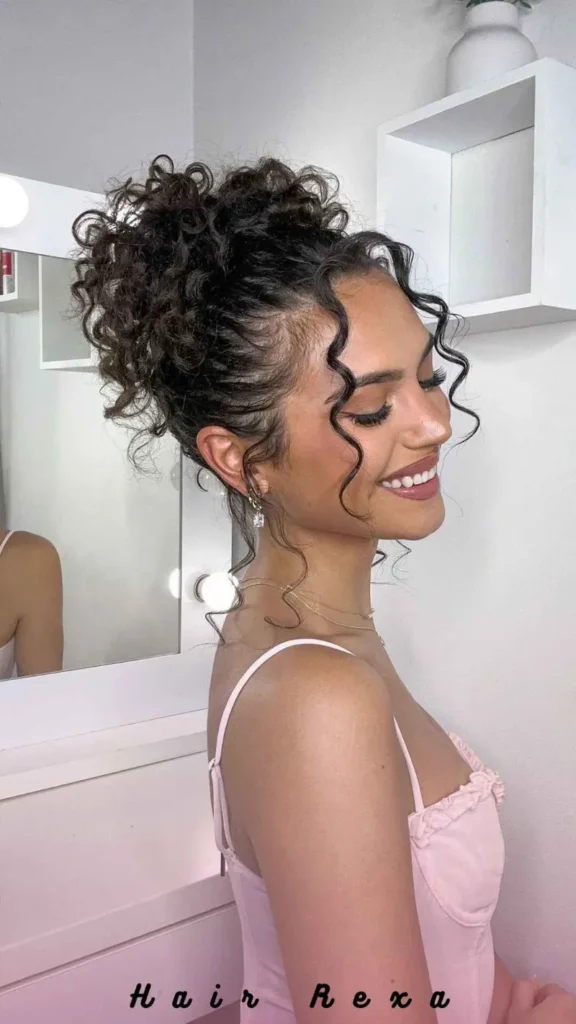
The High Curly Bun is a simple and stylish look for busy days. It keeps your curls up and away from your face while still showing their natural shape. This style works well for school, work, or casual outings. Many people love it because it looks neat without taking too much time. Curly Hairstyle Ideas like this are perfect for quick and easy beauty.
This hairstyle also helps protect your curls from heat and damage. You can make the bun loose for a soft look or tight for a cleaner style. Add a scarf, clips, or small curls in the front for extra charm. It looks beautiful on short, medium, and long curly hair.
Style note: Add a thin fabric headband or silk scarf tied at the base of the bun it elevates the look from casual to intentional immediately.
The Twist-Out
Style: Defined + Versatile
Difficulty: Medium
Best for: Types 4A–4C
The twist-out is a foundational protective style that doubles as a polished everyday look. Two-strand twists are installed on damp, product-loaded hair and left to set overnight or for 24 hours before being unravelled for stretched, defined curls with more elongation than a standard wash-and-go. The result suits nearly every formal or casual occasion.
The most important variables: the size of your twists determines the size of your curl definition, and the product you use determines frizz control. Thicker twists create larger, looser spirals; smaller ones create tight, voluminous definition. Butter-based products give a softer unravel; gel-cream hybrids maintain hold longer.
Pro tip: Separate twists using your fingers never a comb to preserve definition and maximise volume
The Curly Shag
(The Biggest Trend Right Now)
Style: Trendy + Editorial
Difficulty: Low–Medium
Best for: Types 2C–3B
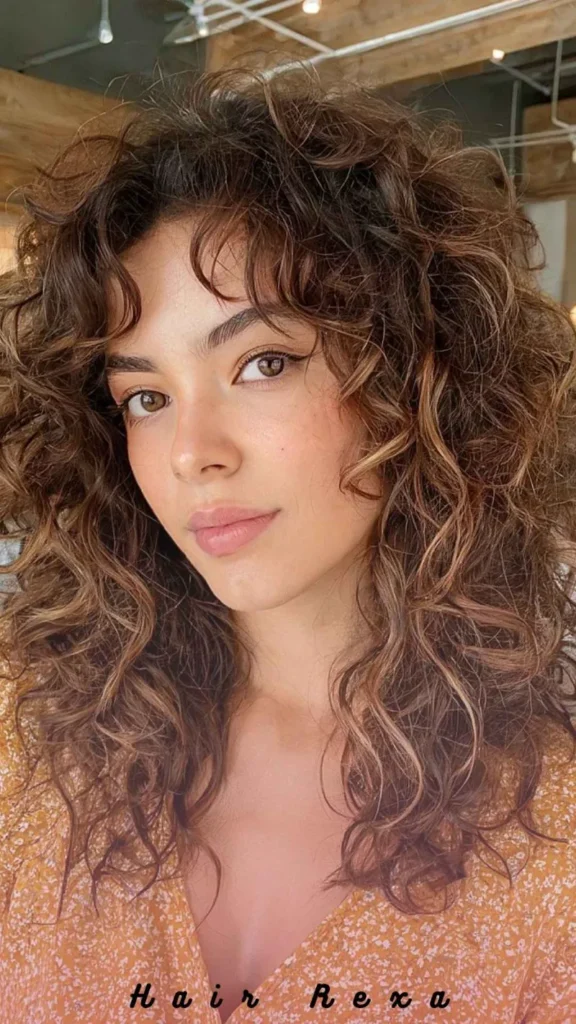
The Curly Shag is a fun and easy haircut for curly hair. It has soft layers that add shape and bounce. It helps curls look light and full at the same time. This style is one of the popular Curly Hairstyle Ideas for people who want a natural and messy look. It works well for daily wear and needs low effort to style.
This haircut also helps reduce heaviness in thick curls. The layers make curls fall nicely and give more movement. It looks good with short or medium curly hair. You can air dry it or use light styling cream for better shape. The Curly Shag is simple, stylish, and easy to maintain every day.
Pro tip: Diffuse upside down for maximum root volume, then flip forward and finish the top layers with a little extra curl cream for definition.
Goddess Braids with Curly Ends
Style: Protective + Glamorous
Difficulty: High (stylist recommended)
Best for: Types 3C–4C
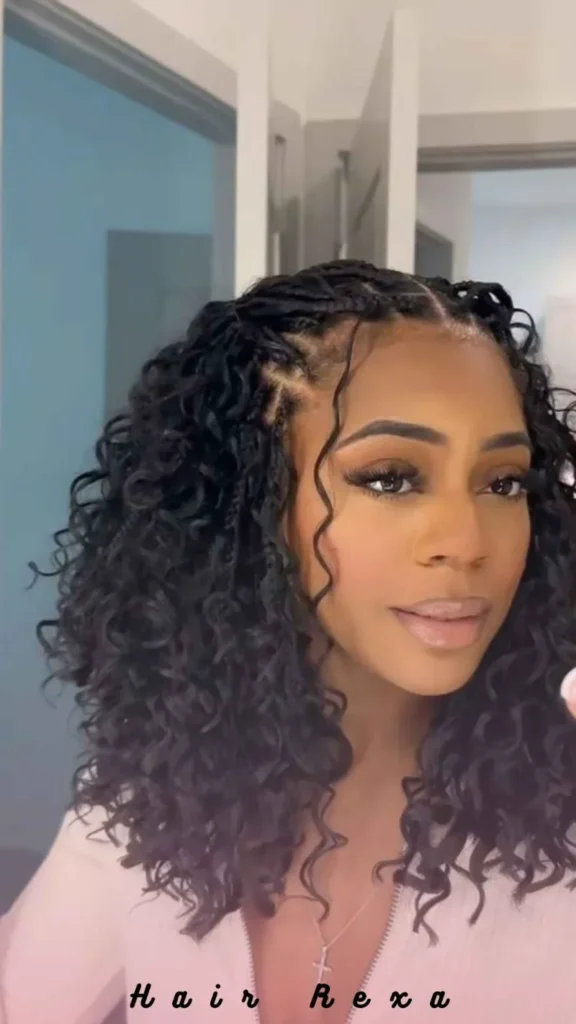
Goddess braids large, raised cornrow-style braids with loose curly ends left out at the tips have become one of the most searched protective styles in 2026–2027. They offer the protective benefits of a braided style while maintaining a soft, feminine look through the free-flowing textured ends. It’s a smart hybrid between full protection and visual softness.
You can achieve this with your natural hair (leaving the last two inches unbraided) or with braiding hair with loose curl extensions added for length. For natural hair users, the leave-out requires moisture retention seal the ends with a curl cream before the style is installed.
Example: This style surged after appearing on multiple red carpets in early 2026, worn with 3–5 large braids swept back, with 3C-pattern curly ends flowing past the shoulders.
Curtain Bangs on Curly Hair
Style: Romantic + Face-framing
Difficulty: Medium
Best for: Types 2B–3C
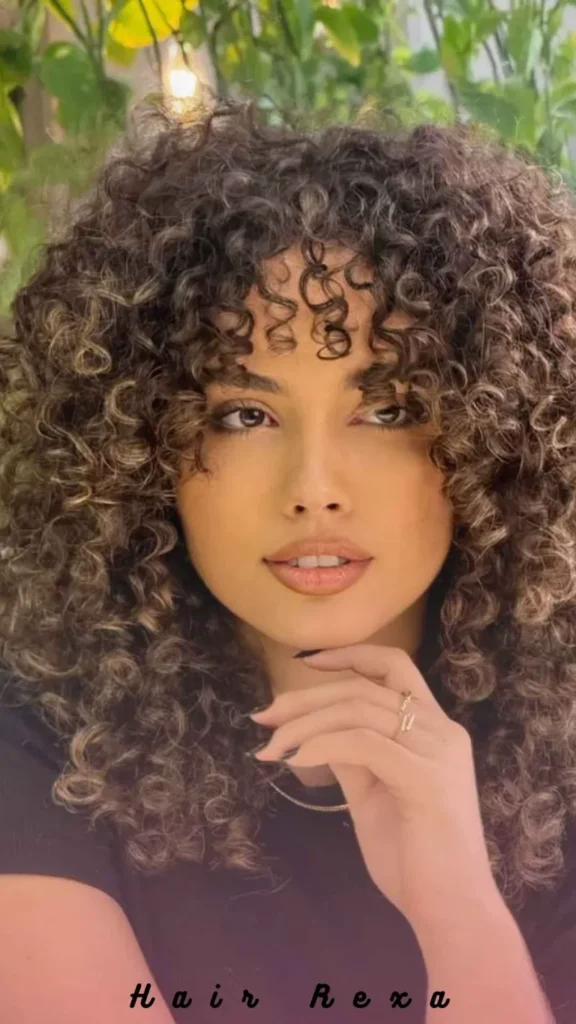
Curtain bangs on curly hair give a soft and face-framing look. They blend well with natural curls and add light movement. This style works well in many face shapes and curl types. It is also a popular choice in Curly Hairstyle Ideas because it looks fresh and easy.
This style is easy to maintain with the right care. You just need light styling cream to keep curls defined and soft. It adds volume around the face without making hair heavy. Regular trims help keep the shape clean and balanced.
Pro tip: Pineapple the bangs separately when sleeping a small scrunchie right at the forehead prevents them from flattening overnight.
The Voluminous Afro
Style: Bold + Sculptural
Difficulty: Easy (maintenance: Medium)
Best for: Types 4A–4C
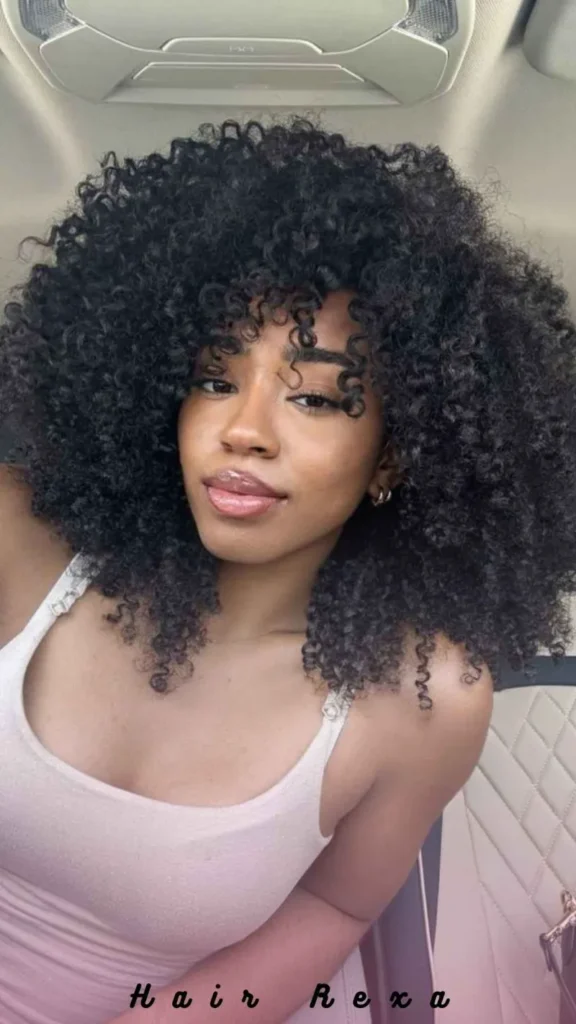
The afro is not a single style it is an entire category of sculptural, expressive looks that range from perfectly symmetrical spheres to wild, asymmetric cloud shapes. In 2026, the trend leans toward the “soft afro”: less defined, more diffused, emphasising volume and shape over individual curl definition. It celebrates shrinkage rather than trying to eliminate it.
Maintaining the shape requires regular trimming to remove split ends that cause the perimeter to look uneven. A wide-tooth pick or afro pick is used to lift and shape never to detangle. Apply a small amount of a non-greasy oil (jojoba, argan) to the perimeter for sheen without weight.
Style note: The afro is one of the most politically and culturally significant hairstyles in modern history. Wearing it is an act of self-expression and identity not just a style choice.
The Half-Up Half-Down Curl Style
Style: Practical + Chic
Difficulty: Easy
Best for: All Curl Types
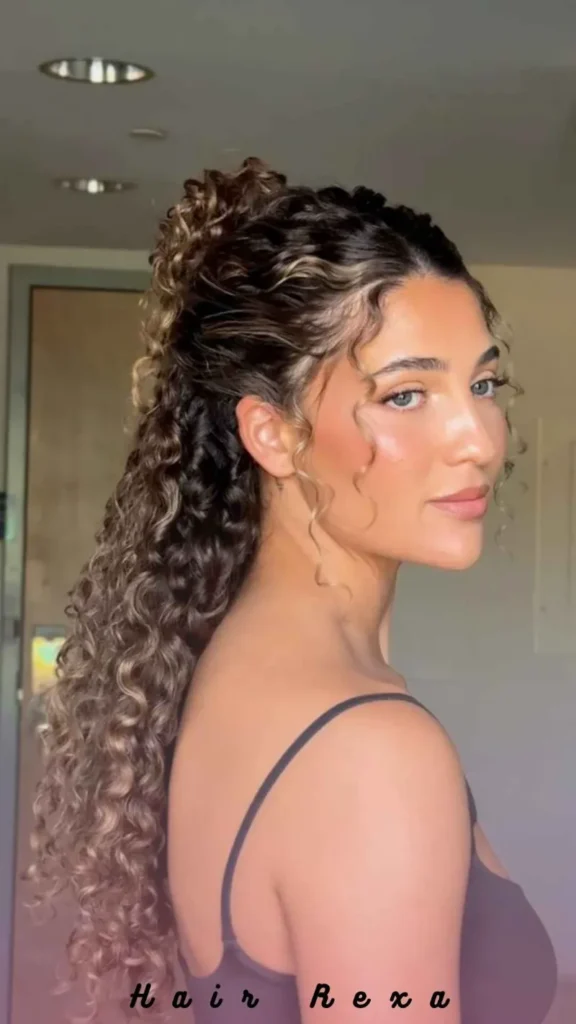
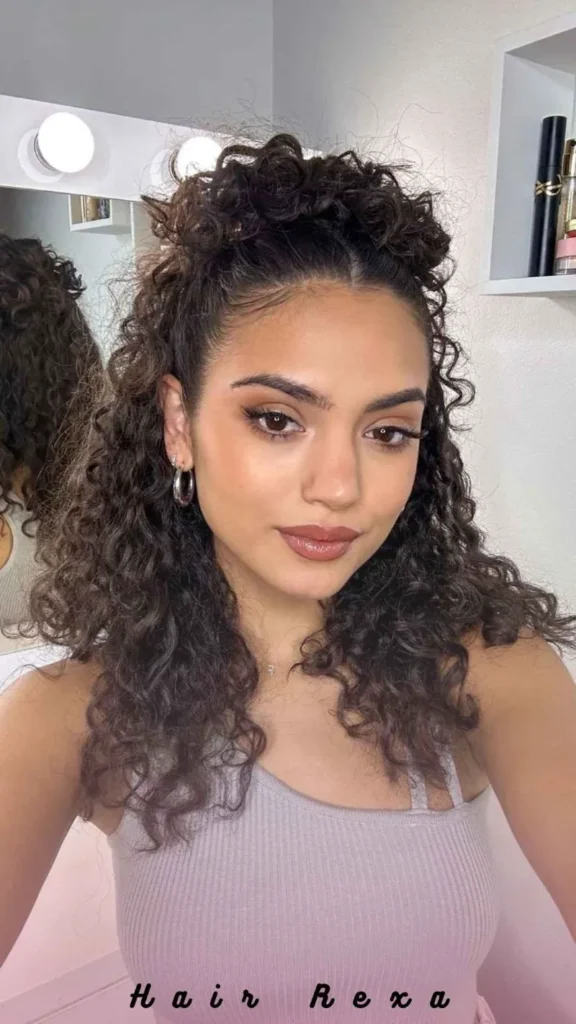
This is perhaps the most practical curly style for people who want their curls visible but need some hair off their face. The top half is gathered into a loose bun, puff, or knot at the crown, while the bottom half falls freely in its natural curl pattern. It requires no heat and can be done in under two minutes on second- or third-day hair when curls are refreshed with a little water and conditioner.
For added elegance, use a claw clip instead of a hair tie. The clip holds the top section without tension on the hairline, and the effortless aesthetic is extremely on-trend for 2026’s “undone but intentional” aesthetic direction.
The Pineapple Refresh (Overnight Styling)
Style: Refresh + Preserve
Difficulty: Easy
Best for: Types 3A–4B
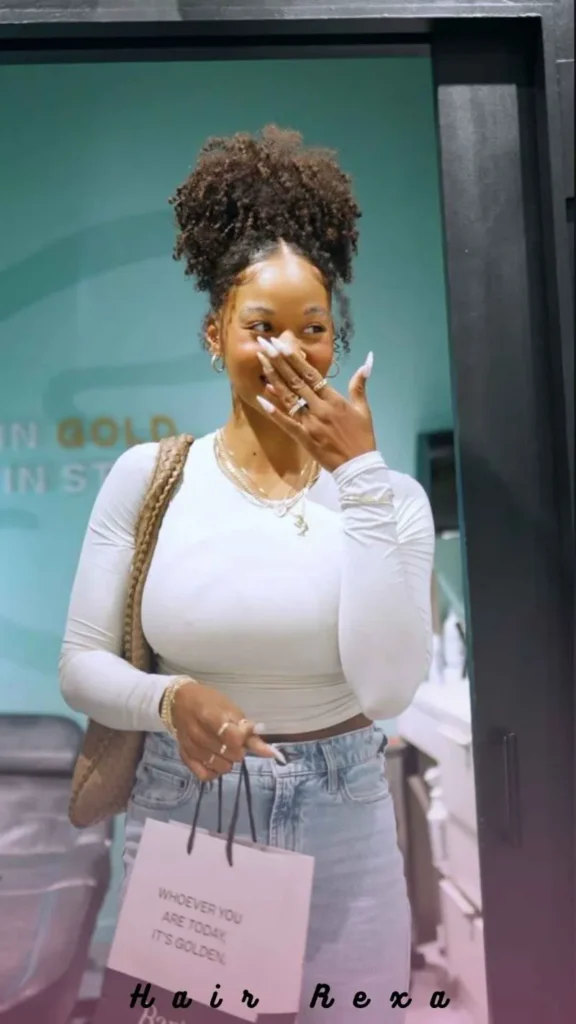
The pineapple is primarily a preservation technique, but done correctly it doubles as a next-day style. Loose curls gathered on top of the head using a very loose scrunchie overnight wake up with volume at the roots and preserved definition through the lengths. A quick refresh with a spray bottle of water and diluted conditioner revives any flatness in under five minutes.
The pineapple works best for medium to long curly hair. Short hair may benefit from a “multi-pineapple” two or three smaller sections across the top to prevent tension creases at the roots.
Pro tip: Sleep on a satin pillowcase in addition to pineappling for maximum frizz reduction overnight.
Braided Updo with Natural Edges
Style: Protective + Polished
Difficulty: Medium
Best for: Types 3C–4C
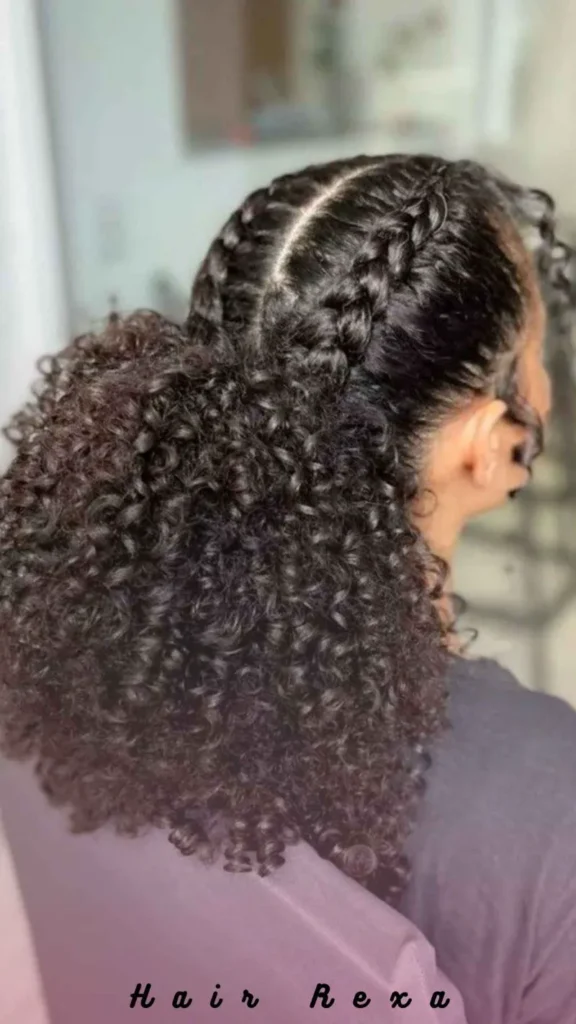
This style combines neat flat-twist or cornrow sections at the crown with a gathered curly puff or bun at the back, with baby hairs or natural edges laid flat at the perimeter. It is a powerful protective style that keeps hair secure during exercise or warm weather while still looking polished and intentional. The combination of structure and texture is the defining quality of this look.
Edge control gel is used sparingly to smooth the hairline, but the best natural-edge looks don’t over-slick they follow the hair’s natural growth direction and let the density of the edge do the visual work.
Real-life scenario: Zara, a 3C-hair competitive runner, switched to this style for all her race days. Zero flyaways, no mid-race adjustments, and compliments at the finish line.
The Curly Lob (Long Bob)
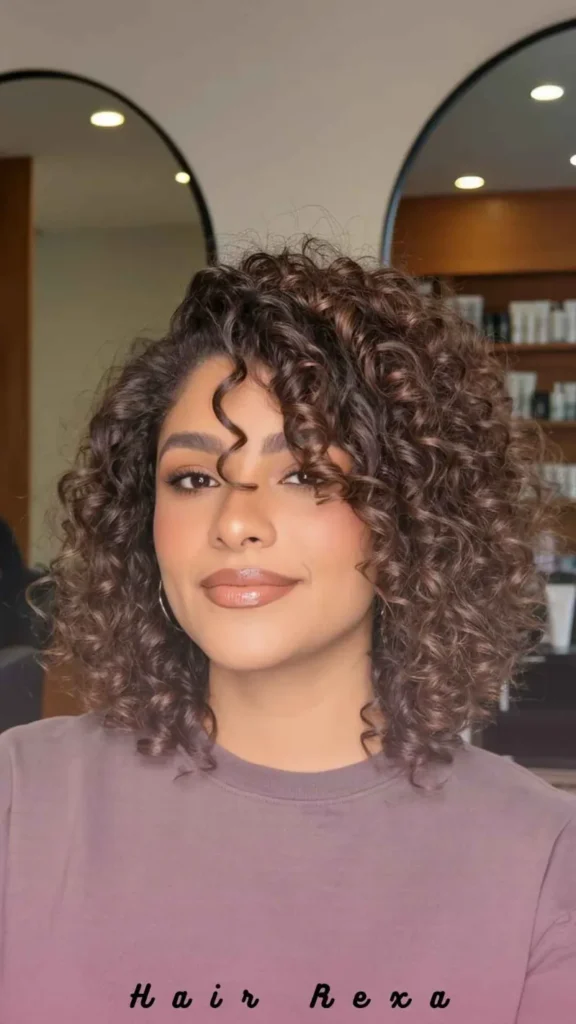
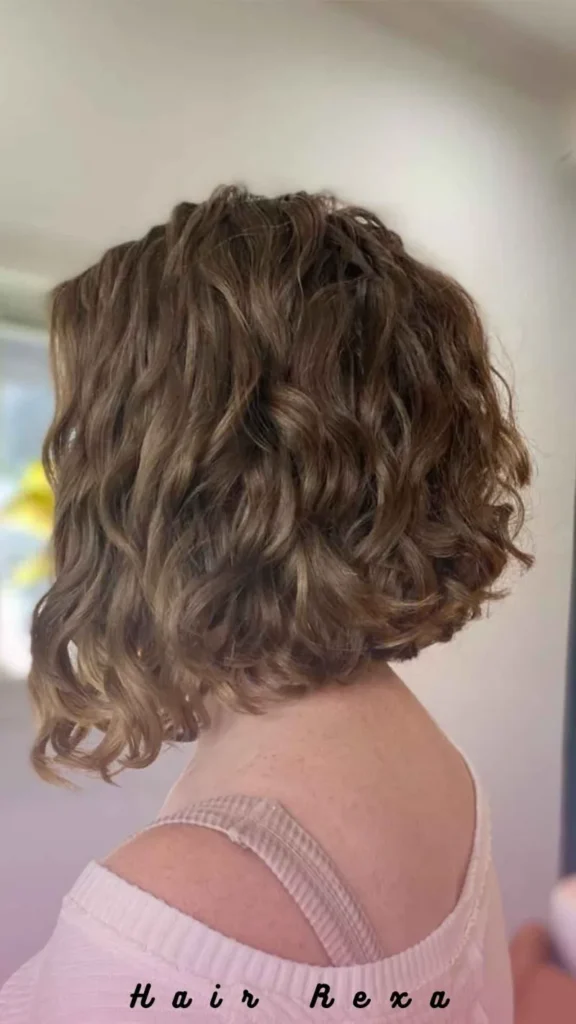
The curly lob sits between the chin and shoulder and offers the most versatile length for curly hair in 2026. It is long enough to pull back on humid days, short enough that product distribution is easy, and the length prevents the excessive weight that causes Type 3 curls to lose their spring. It works across curl types and suits most face shapes when cut with internal layers.
Unlike the shorter bob, the curly lob allows the curl pattern to fully express itself before reaching the end which means more spiral definition and a more polished natural finish with minimal effort. Annual trims are all the maintenance required once the shape is established.
Style note: The curly lob is the single most “salon-to-street” ready style in this list it looks intentional whether you just diffused it or slept on it.
Still Deciding? Here’s a Quick Comparison
✦ Side-by-side style breakdown
✦ Face shape guidance
✦ Honest pros and cons
| Hairstyle | Difficulty | Maintenance | Best Face Shapes | Pros | Cons |
|---|---|---|---|---|---|
| Curly Bob | Medium | Monthly trims | Oval, Heart, Square | Removes bulk · Polished look | Grows out quickly · Requires dry cut |
| Wash-and-Go | Easy | Low (bi-weekly) | All face shapes | Fast · Very low manipulation | Humidity-sensitive · Learning curve |
| Curly Bun | Easy | Very Low | Oval, Round, Long | 2-minute style · Any occasion | Can cause tension at hairline |
| Twist-Out | Medium | Low (3–5 days) | All face shapes | Elongates curls · Multi-day wear | Overnight prep required |
| Curly Shag | Medium | Trimming every 8 wks | Oval, Long, Diamond | Ultra-trendy · Movement-filled | Grows out unevenly without trims |
| Goddess Braids | High | Low (style lasts wks) | Oval, Round, Heart | Full protective · Stunning visual | Needs professional install |
| Curtain Bangs | Medium | Regular trimming | Long, Diamond, Oval | Face-framing · Romantic feel | Humidity causes lifting |
| Voluminous Afro | Easy | Low–Medium | Long, Oval, Diamond | Bold · Zero heat needed | Shape needs regular trimming |
| Half-Up Half-Down | Easy | Very Low | All face shapes | Quick · Works on day 2–3 hair | Less defined at the back |
| Curly Lob | Easy | Low (trim 2×/year) | Oval, Square, Round | Most versatile · Low effort | Cut needs specialist stylist |
Conclusion
Curly hair can look stylish, soft, and full of life with the right hairstyle. These Curly Hairstyle Ideas help you try new looks without making your routine hard. From simple daily styles to trendy party looks, there is something for every hair length and curl type. Small changes can make your curls stand out in a beautiful way.
The best thing about Curly Hairstyle Ideas is that they work for both natural and styled curls. You can keep your hair simple or create a bold new look with ease. Healthy curls and the right hairstyle can improve your full appearance. Try different styles and choose the one that makes you feel confident every day.
Practical Tips & Expert Insights
Always diffuse, never blow-dry
A diffuser attachment disperses airflow to dry curls without disrupting their shape. Direct heat from a standard nozzle creates frizz by separating curl clumps.
Detangle only when wet
Curly hair is most elastic and least prone to breakage when wet and conditioner-coated. Dry detangling causes breakage at the most fragile points of each curl.
Protein–moisture balance
Over-moisturised hair loses definition and becomes mushy. Over-proteinised hair becomes brittle. Alternate between protein and moisture treatments monthly.
Find a curl-specialist stylist
A stylist who understands curl patterns will never cut your hair fully wet. If they do, leave. Shrinkage makes wet cuts consistently unpredictable for curly textures.
Refresh, don’t re-style
Most curly styles last 3–5 days with a simple water-conditioner refresh mist. Re-washing and re-styling daily removes natural oils and increases fragility over time.
Silk or satin, always
Cotton pillowcases absorb moisture and create friction that destroys curl definition overnight. Satin pillowcases or scarves are a non-negotiable investment for any curly-haired person.
FAQ’S About Curly Hairstyle Ideas
What is the easiest curly hairstyle for beginners?
The wash-and-go or a curly bun are the easiest starting points. Both require minimal tools, no heat, and work on second-day hair. Start with the wash-and-go using a light curl cream to understand how your curl pattern behaves naturally.
Which curly hairstyles work best for Type 4 hair?
Twist-outs, wash-and-gos, braided updos, the afro, and goddess braids are all well-matched to Type 4 hair. These styles celebrate the natural coil pattern rather than trying to loosen or stretch it unnecessarily.
How do I reduce frizz in curly hairstyles?
Apply all products to dripping-wet hair, use a microfibre towel (not cotton), diffuse on low heat, and sleep on satin. Frizz is caused by moisture disruption preventing that disruption at every step is the only long-term solution.
How often should curly hair be cut?
Every 8–12 weeks for active styles like the shag or bob; every 4–6 months for length-retention goals. Regular trims prevent split ends from travelling up the shaft and causing breakage above the ends.
Can I do curly hairstyles on straight or wavy hair?
Wavy hair (Type 2) can adopt most of these styles with minor technique adjustments. Straight hair can use flexi rods, curl creams, and diffusers to approximate curly styles, though results will vary by method and hair porosity.


