
8 Long Layered Haircuts That Frame Your Face Beautifully

A long layered haircut is a cut where the hair is trimmed at different lengths throughout the head rather than one blunt, even length. These graduated layers create depth, volume, and natural movement that flat, one-length hair simply cannot achieve.
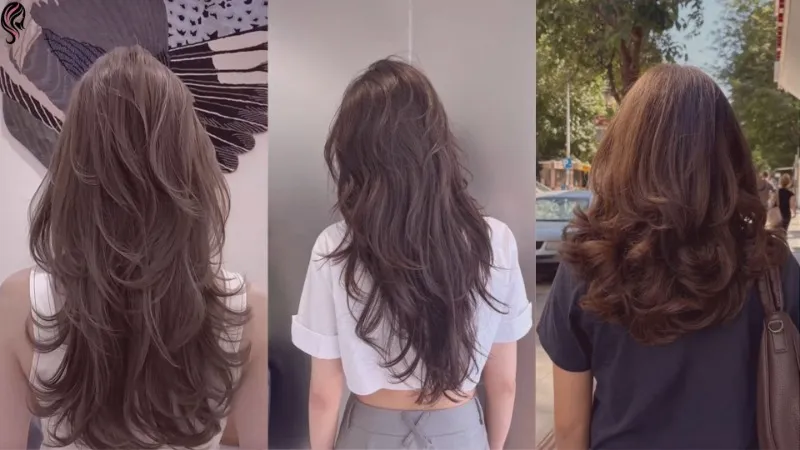
Unlike short cuts that require frequent trims, long layers are remarkably low-maintenance. They grow out gracefully and can be adapted to almost any hair texture or lifestyle. Whether you want soft, cascading waves or sleek and straight styles, layers make it possible.
In 2026, long layered haircuts have evolved beyond the classic Rachel cut. Today’s styles are more personalized softer at the face, heavier at the ends, and customized to your specific texture and face shape. They’re less about one “look” and more about unlocking your hair’s natural best version.
Classic Cascade Layers
✦ Timeless & universally flattering
✦ Great for thick hair
✦ Natural movement booster
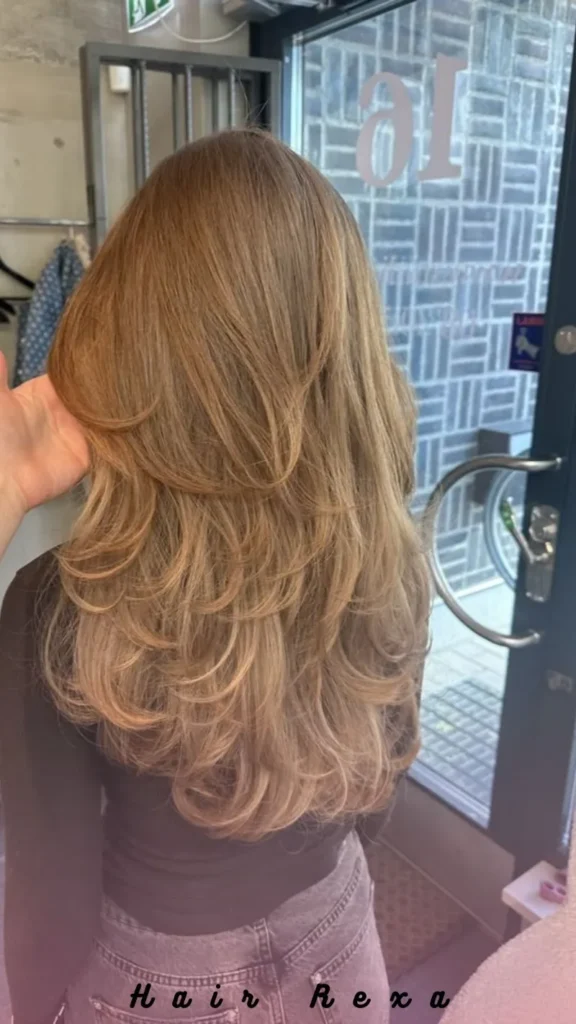
Cascade layers are the foundation of all long layered cuts. The hair is cut in long, flowing sections that gradually increase in length from the crown to the ends creating a waterfall-like visual effect. They’re the most classic long layered look and the safest starting point if you’re new to layers.
This cut works best for medium to thick hair. Fine hair can benefit too, but needs shorter intervals between layers to avoid looking stringy. Ask your stylist for “long, blended layers starting below the collarbone” if you want maximum length with gentle movement.
Pro Tip
Blow-dry with a round brush rolling outward at the ends to amplify the cascade effect. A dime-sized amount of volumizing mousse through damp hair before blow-drying adds lasting bounce without stiffness.
Style Note: Pair cascade layers with a deep side part for an effortlessly glamorous, old-Hollywood vibe. Works beautifully on both straight and wavy textures.
Must Read: Long Layered Haircuts That Frame Your Face Beautifully
Face-Framing Layers
✦ Highlights your best features
✦2026’s most requested style
✦ Works with all face shapes
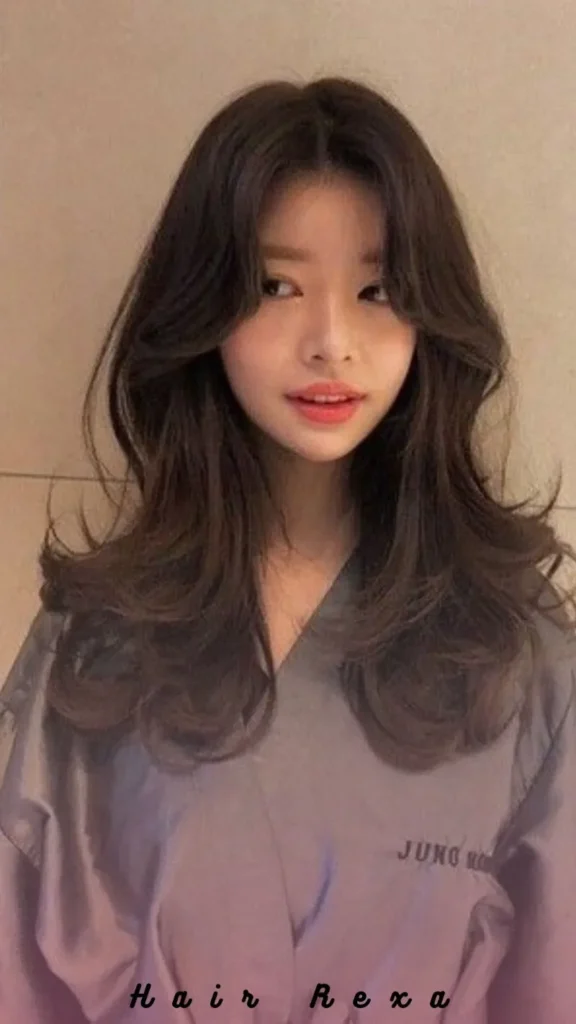
Face-framing layers are shorter pieces cut specifically around the front of the hair to draw attention to your facial features. They soften angles on square faces, add width to narrow faces, and give oval faces that coveted, effortless look. In 2026, face-framing layers are the single most-requested style in salons globally.
Unlike curtain bangs (which are a fringe), face-framing layers blend seamlessly into the rest of the hair. They typically start around the chin or jawline and taper into the longer sections. The key is asking your stylist for “invisible blending” no harsh demarcation lines.
Real-Life Scenario
Sara, 34, had long straight hair that felt one-dimensional. She asked for face-framing layers starting at the chin. Within minutes of styling, she noticed the layers made her cheekbones appear more defined and her eyes look larger without changing her overall length at all.
Pro Tip
Use a flat iron to add a slight outward flip to your face-framing layers for a soft, retro curl. This single move transforms a basic cut into a fully styled look in under 2 minutes.
Read More: Easy Everyday Hairstyles That Make Thin Hair Look Fuller
Butterfly Cut with Long Layers
✦ Voluminous crown effect
✦ Trending heavily in 2026
✦ Best for fine-to-medium hair
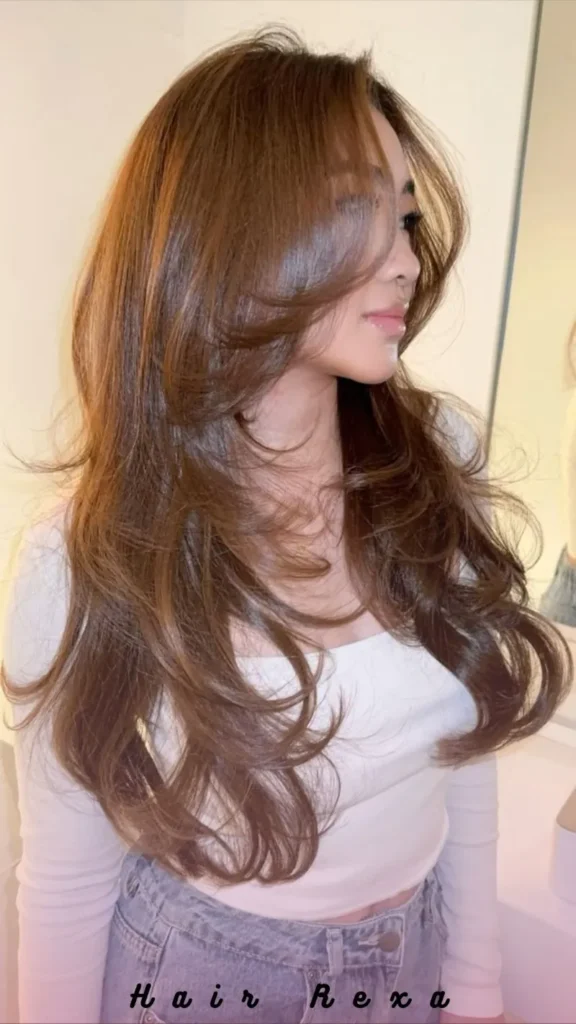
The butterfly cut is a layered style where shorter layers sit close to the crown and blend into longer, flowing layers beneath mimicking the shape of butterfly wings when the hair moves. It delivers dramatic volume at the top without sacrificing length at the bottom.
This cut is particularly transformative for fine hair. The shorter crown layers create the illusion of fullness that fine hair naturally lacks, while the long sections below maintain the feel of length. It’s a smart structural trick disguised as a trendy haircut.
Pro Tip
Let the crown layers air-dry naturally for maximum texture and height. Avoid combing through when dry use your fingers instead to preserve the butterfly shape’s natural volume.
Style Note: The butterfly cut pairs beautifully with curtain bangs. The fringe echoes the “wings” of the layers and creates one cohesive, editorial silhouette.
Also Read: Gym Hairstyles That Stay Perfect Through Every Workout
Long Shag Cut (The Modern Shaggy Layer)
✦ Edgy yet effortless
✦ Perfect for wavy & curly hair
✦ 70s-inspired revival
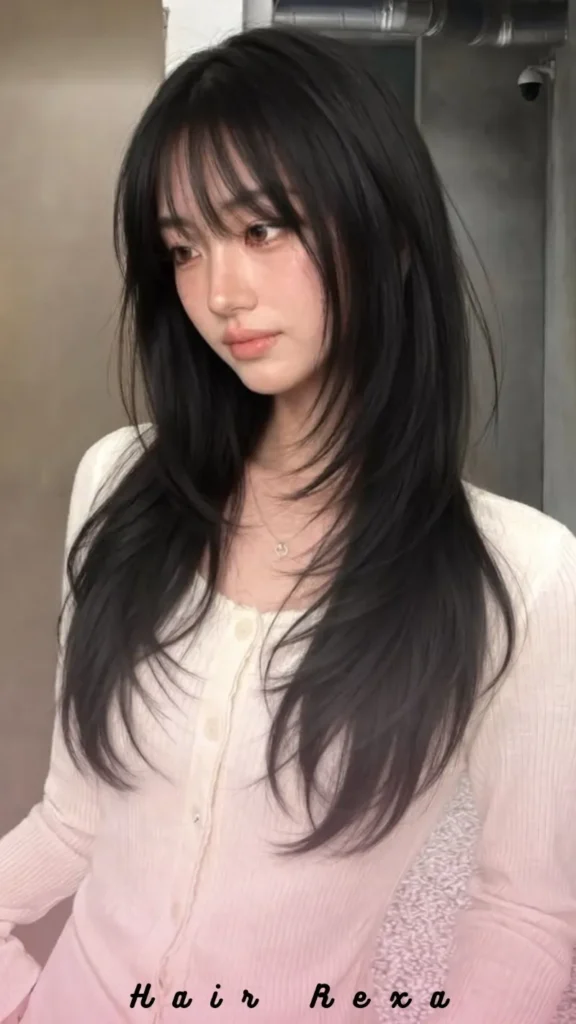
The long shag is defined by its choppy, heavily textured layers throughout the entire head from the crown to the tips. Unlike the softer cascade style, shag layers are deliberately uneven and high-movement. The result is a relaxed, rock-and-roll aesthetic that works surprisingly well for professional settings too.
Wavy and curly-haired people will find the long shag particularly flattering because the uneven layers give each wave and curl room to define itself. Heavy single-length long hair can flatten natural curl patterns; the shag liberates them.
Real-Life Scenario
Maya, 29, had 3B curls that always looked heavy and bunched. After getting a long shag with heavy internal layers, her curls separated and spiraled individually. She went from straightening daily to air-drying in under an hour with zero product.
Style Note: Use a sea salt spray on towel-dried hair and scrunch upward. Let it air-dry completely before touching. The result is a perfectly imperfect, textured wave that looks intentionally casual.
Don't Skip: Wolf Cut Hairstyles for Straight, Wavy, and Curly Hair Types
Curtain Bangs with Long Layers
✦ Soft framing for any face
✦ Grows out gracefully
✦ Pairs with all layer styles
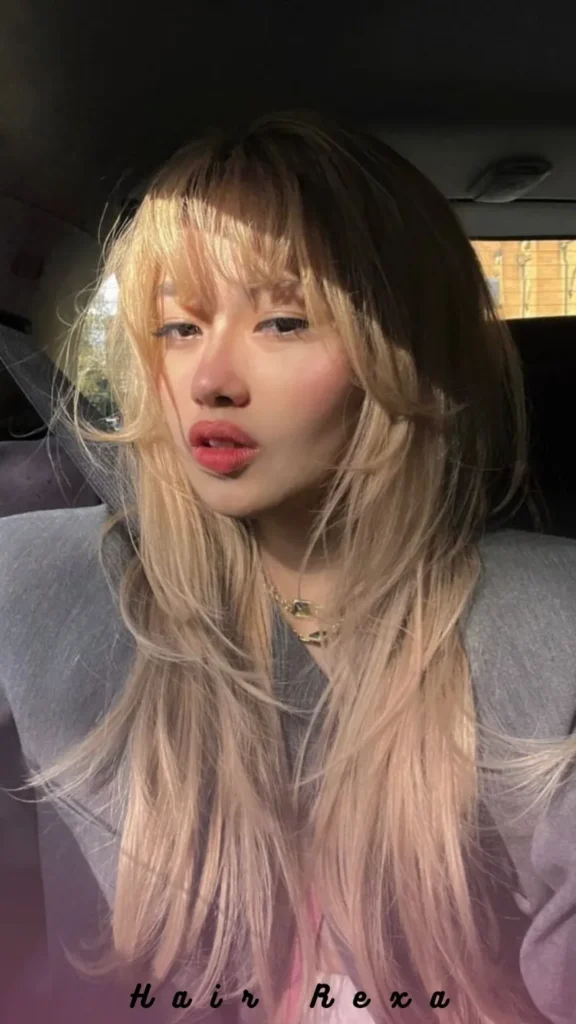
Curtain bangs the soft, parted fringe that drapes on either side of the face are having a defining moment in 2026. When combined with long layers, they create one of the most cohesive and versatile haircuts available. The bangs blend naturally into the face-framing layers, making the transition seamless and easy to maintain.
One underrated benefit of curtain bangs: they’re forgiving. Because they’re designed to be swept to the sides, growing them out is graceful. You don’t get the awkward “too long to be bangs, too short to tuck back” phase you get with blunt fringes.
Pro Tip
Blow-dry curtain bangs in two directions (left and right) using a medium round brush. This creates the natural, open-drape look. Air-drying alone tends to produce a flat, center-parted effect that loses the curtain shape.
V-Cut Long Layered Haircut
✦ Dramatic length illusion
✦ Flattering for straight hair
✦ Defined, polished silhouette
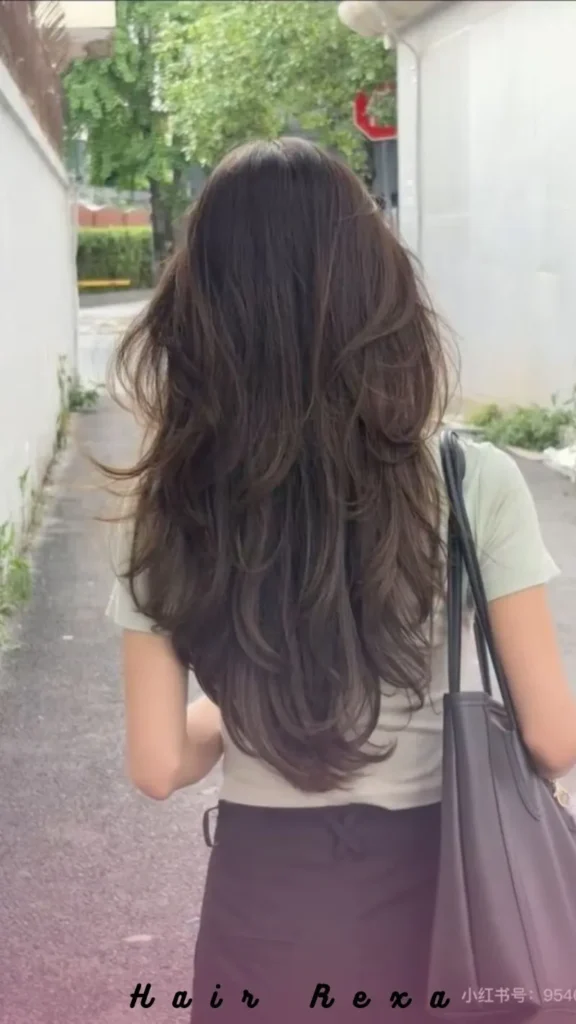
A V-cut creates a pointed, dramatic V-shape at the back of the hair with layers throughout. The longest point hits at the center back, tapering gradually toward the sides. It’s one of the most visual and deliberate of all long layered styles ideal for those who want a sculptural, intentional shape.
The V-cut works best on straight to slightly wavy hair where the V-shape at the back remains visible. On very curly hair, the V tends to disappear into the curl pattern. Layers throughout the top and mid-sections are essential to keep the style from looking top-heavy.
Style Note: A V-cut looks especially striking when hair is styled sleek and straight. Consider adding a gloss treatment for maximum shine the V-shape at the back becomes a visual showstopper from behind.
Waterfall Layers for Curly Hair
✦ Reduces bulk naturally
✦ Defines curl pattern
✦ Zero heat required
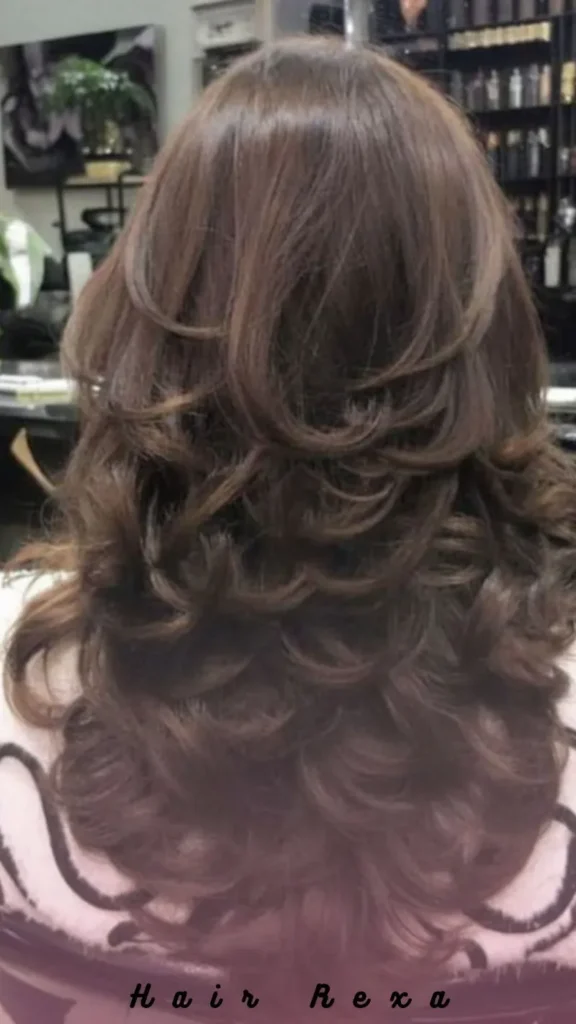
Long layered haircuts for curly hair require a different approach than straight cuts. Waterfall layers are cut to taper toward the center back, creating a cascading, flowing effect that celebrates natural curl patterns rather than fighting them. The key difference: curly hair is always cut dry, so the stylist can see exactly where each layer falls when the curl springs up.
Many curly-haired people avoid layers out of fear of the “triangle” silhouette wide at the sides, flat on top. Done correctly, long waterfall layers actually prevent this by removing weight from the sides and building height at the crown.
Pro Tip
Always ask for a Deva Cut or dry curl cut specifically. Stylists trained in curly cutting techniques cut each curl individually at its natural curl line the result is dramatically more precise than wet cutting.
Invisible Layers for Fine Hair
✦ Adds volume without bulk
✦ Seamless, polished finish
✦ Ideal for thin or flat hair
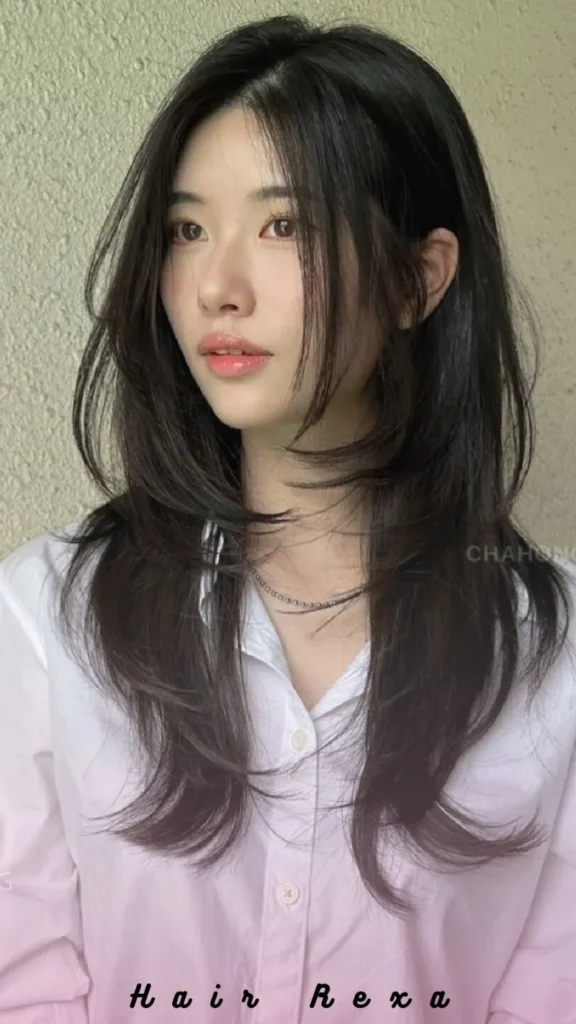
Invisible layers sometimes called “soft layers” or “feather layers” are long, subtle layers that are barely perceptible when hair is straight but create significant movement and body when dried or styled with heat. They’re the secret weapon of fine-haired people who want volume without visible layering.
The key to invisible layers is restraint. Too many or too short, and fine hair looks stringy and uneven. The right approach: 3–4 long layers starting below the chin, blended with precision. The result is hair that looks effortlessly full, not obviously layered.
Real-Life Scenario
Priya, 41, had pin-straight, fine hair and was convinced layers would ruin her length. Her stylist added just 3 invisible layers. Post-blowout, her hair had the kind of body she associated with a blowout bar except it now happened every time she dried her hair at home.
Pro Tip
Apply a volumizing spray at the roots before blow-drying, not at the ends. Fine hair tends to get weighed down at the tips keep products lightweight and root-focused for maximum lift from invisible layers.
Still Deciding? Here’s a Quick Comparison
| Hairstyle | Difficulty | Maintenance | Best Face Shapes | Pros | Cons |
|---|---|---|---|---|---|
| Classic Cascade Layers | Easy | Low Trim every 10–12 weeks | All shapes Especially oval & heart | Timeless look Grows out gracefully Works any texture | May lack drama for those wanting bold style |
| Face-Framing Layers | Easy | Low Touch-up every 8–10 weeks | All shapes Especially square & oblong | Slimming effect Highlights features Very natural-looking | Can look flat without regular styling |
| Butterfly Cut | Medium | Medium Trim every 8 weeks | Round & oval Heart-shaped faces | Dramatic volume Instagram-worthy Transformative for fine hair | Needs blow-drying to look intentional |
| Long Shag Cut | Medium | Medium Trim every 8–10 weeks | Oval, oblong Heart-shaped | Very trendy Amazing on waves/curls Low styling effort | Can look messy on pin-straight hair without product |
| Curtain Bangs + Layers | Easy–Medium | Medium Bangs trim every 6–8 weeks | All shapes Especially oval & round | Cohesive, styled look Grows out gracefully Very flattering | Bangs require daily styling to maintain shape |
| V-Cut Layers | Easy (at salon) | Low–Medium Trim every 10 weeks | Oval, square Oblong faces | Dramatic silhouette Very polished Enhances straight hair | V-shape invisible on very curly hair |
| Waterfall Layers (Curly) | Hard (needs specialist) | Low Trim every 12–16 weeks | All especially oval & heart | Defines curls Reduces bulk Air-dries beautifully | Requires curly-specialist stylist |
| Invisible Layers (Fine Hair) | Easy | Low Trim every 10–12 weeks | All shapes Best for narrow faces | Adds volume subtly Looks natural Easy to maintain | Less dramatic than other layered styles |
Conclusion
Long layered haircuts remain one of the most universally flattering, versatile, and low-commitment ways to transform your hair. Whether you choose cascading layers for movement, face-framing layers for definition, or a butterfly cut for volume, the right long layered cut can completely change how your hair looks and feels on a daily basis.
The key is matching the style to your hair type, face shape, and lifestyle not just chasing a trending look. Use this guide as your starting point, bring photos to your stylist, and don’t be afraid to ask for exactly what you want.
Practical Expert Tips for Long Layered Haircuts
✂️
Bring reference photos
Words like “soft layers” mean different things to different stylists. Two photos communicate in seconds what ten minutes of explanation can’t. Bring front and back reference images for best results.
💧
Use a microfiber towel
Regular towels roughen the hair cuticle, causing frizz and breakage at the very layers you’re trying to show off. A microfiber towel or soft T-shirt absorbs moisture without friction damage.
🌬️Blow-dry in sectionsClip hair into three sections (bottom, middle, top) and dry from bottom to top. This ensures each layer gets directed airflow the key to that salon-smooth result at home.
🔥
Always use heat protectant
Layers involve more surface area exposed to heat styling than blunt cuts. A lightweight heat protectant spray applied before blow-drying or flat-ironing is non-negotiable for healthy, glossy layers long-term.
✨
Refresh with dry shampoo
Day-two hair is often when long layers look their absolute best the natural oils weigh the hair just enough to enhance wave and texture. Use dry shampoo at the roots to extend this phase.
📅
Book trims proactively
The biggest mistake people make with layered cuts: waiting until the hair looks bad before booking a trim. Schedule your next appointment the same day as your current one every 8–10 weeks keeps the shape perfect.
FAQ’S About Long Layered Haircuts
What is a long layered haircut?
A long layered haircut is a cut where the hair is trimmed at multiple different lengths throughout the head, creating depth, movement, and volume while preserving overall length. Unlike blunt cuts, layers give hair a dynamic, multi-dimensional shape.
Are long layered haircuts good for thin hair?
Yes invisible or feather layers are specifically designed for fine hair. They add the appearance of volume and body without making thin hair look stringy. Avoid heavy or too many layers, which can make fine hair appear sparse.
How often should I trim long layered hair?
Every 8–12 weeks is the general rule. Layers grow out faster at the crown, so waiting too long causes an uneven, shapeless look. Fine hair needs more frequent trims than thick hair to maintain its layered structure.
What face shape suits long layered haircuts?
Long layered haircuts flatter virtually every face shape. Oval faces suit almost any variation. Square faces benefit from face-framing layers that soften angles. Round faces look best with longer layers that create vertical length. Oblong faces do well with side-swept and shorter layers around the face.
Do long layers work on curly hair?
Absolutely but curly hair requires a specialist. Always request a dry cut (also called a Deva Cut) from a stylist trained in curly cutting. Wet cuts on curly hair often result in uneven, shorter-than-intended layers due to the curl’s natural spring.


